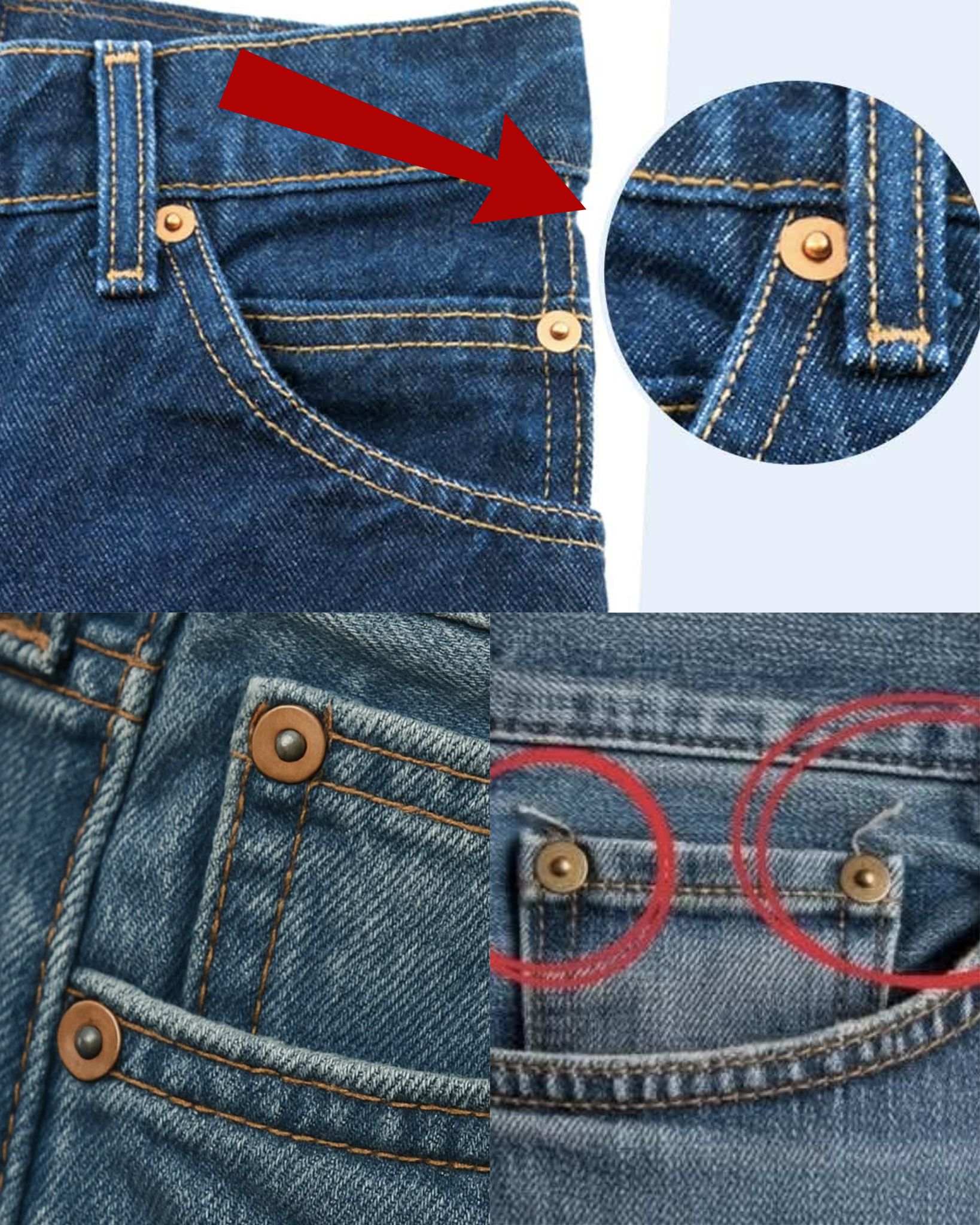
If you’ve ever slipped on a pair of jeans and paid even the slightest attention to the pockets, you’ve probably noticed those tiny, metallic buttons dotting the corners. For most people, they barely register—just another decorative detail on an everyday garment. Yet these little copper or silver studs have a surprisingly functional origin, and their story stretches back to the era when jeans weren’t worn for fashion but for pure survival.
A Forgotten Feature With a Powerful Past
Today, denim is a style staple—comfortable, versatile, and worn by virtually everyone. But rewind to the late 1800s, and jeans told a very different story. Around the 1870s, laborers like miners, railroad workers, and ranch hands needed clothing that could withstand backbreaking labor in harsh environments. Their work trousers frequently split at the seams or tore around the pockets under the weight of tools and heavy use.
That’s when tailor Jacob Davis, who routinely repaired these ripped trousers, noticed a pattern: the stress points—especially pocket corners—were giving out first. He needed a way to strengthen the garment in these vulnerable spots. His solution was brilliantly simple: attach small metal fasteners to reinforce the seams.
These fasteners—now known as rivets—would soon become the defining feature of durable denim, immortalized when Davis partnered with Levi Strauss to patent the idea in 1873. And just like that, a humble reinforcement tool became part of fashion history.

How Do Rivets Actually Work?
Though they might look like mere decorations today, rivets perform a vital structural function. Their job is to support the parts of jeans that endure the most strain. Think of the areas where your jeans stretch or tug the most—like the edges of front pockets, the base of the fly, and sometimes even near the belt loops. These spots undergo constant pulling, bending, and pressure.
Rivets act as miniature anchors. By fastening through multiple layers of denim, they distribute the tension that would otherwise concentrate on a single stitch or seam. Because they spread this pressure across a wider area, rivets dramatically reduce the likelihood of tearing. In short, they act as tiny superheroes guarding your jeans from early retirement.
Manufacturers commonly use brass or copper for rivets—not just for their aesthetic appeal, but for their strength and resistance to rust. These metals endure decades of wear without corroding, even when exposed to sweat, moisture, or frequent washing.
People who have worn both riveted and non-riveted jeans will tell you: the difference is obvious. Jeans without rivets tend to fray or rip at stress points much sooner. Those tiny buttons might seem insignificant at first glance, but their impact on longevity is huge.
Why Rivets Still Matter Today
Even though jeans are no longer primarily workwear, the need for durability hasn’t disappeared. Modern denim still goes through daily stretching, pocket loading, kneeling, squatting, and plenty of friction. Rivets keep the garment intact through years of wear and countless wash cycles.
Beyond function, rivets have also become a signature aesthetic element. Their presence gives denim its iconic rugged look and contributes to the classic visual identity of jeans. In many ways, they symbolize the heritage of denim—a nod to the garment’s blue-collar origins and enduring toughness.
Some contemporary brands experiment with removing rivets for comfort or style, but traditional denim lovers argue that jeans without rivets simply aren’t the same. The hardware is part of the culture, history, and craftsmanship that make denim unique.
A Tiny Detail With a Big Story
So the next time you notice those small buttons along your pocket seams, you’ll know they’re not just there for show. They represent an ingenious solution to a century-old problem, rooted in the gritty days of gold miners and railway builders. Rivets have helped jeans evolve from rugged workwear to the global fashion staple they are today—all while continuing to perform the job they were originally designed for.
These miniature metal pieces may be easy to overlook, but they play a massive role in keeping your denim strong, functional, and long-lasting. A tiny detail, yes—but one that shaped the entire history of the world’s favorite pair of pants.