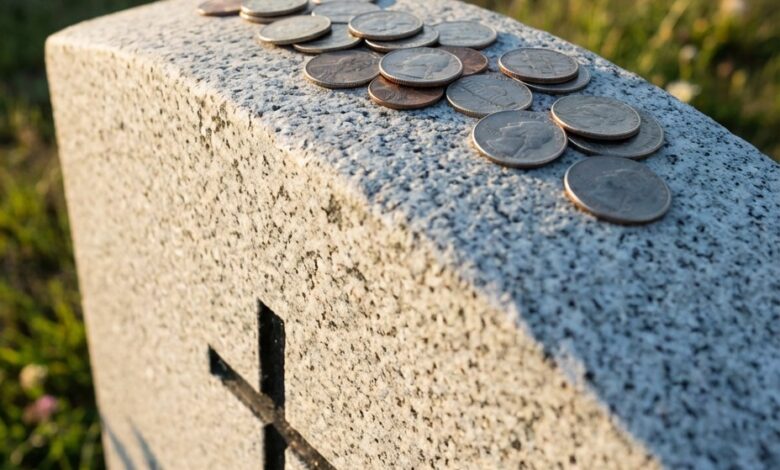
The act of visiting a cemetery is often a deeply personal journey through history, grief, and reflection. As you navigate the hallowed rows of headstones, you may occasionally notice small, glinting objects resting atop the granite or marble markers. At first glance, these silver and copper discs might appear to be mere spare change dropped by a distracted passerby. However, in the realm of military tradition and memorial etiquette, these coins represent a sophisticated and silent language of honor. This practice, deeply rooted in the American armed forces, serves as a profound communication system between the living and the dead, ensuring that the legacy of a fallen hero remains vibrant and respected long after the funeral flowers have withered away.
Understanding why coins are left on graves requires a look into the psychology of remembrance and the unique bond shared by those who have served. For a grieving family, seeing a coin on a loved one’s headstone provides immediate emotional relief and a sense of communal support. It is a tangible sign that their soldier, sailor, airman, or marine has not been forgotten by the brotherhood and sisterhood of arms. This custom became particularly prominent during the Vietnam War, a time when political tensions made it difficult for some to express their respect openly. Leaving a coin was a quiet, non-verbal way to pay respects without inviting unwanted political debate, allowing veterans to honor their peers with dignity and discretion.
The specific denomination of the coin left behind is not accidental; each piece of currency carries a distinct message regarding the relationship between the visitor and the deceased. This hierarchy of coins serves as a historical record of a veteran’s journey through the military. A penny is the most common token found in cemeteries. In the language of military remembrance, a penny simply signifies that a visitor has stopped by to pay their respects. It is a humble gesture of gratitude, a way of saying, “I am here, and I remember you.” For families, a penny is a beautiful reminder that their loved one’s life continues to touch others, even strangers who feel compelled to pause and reflect on their sacrifice.
As the value of the coin increases, the level of personal connection deepens significantly. A nickel resting on a headstone indicates a shared history of preparation and discipline. It signifies that the visitor attended boot camp or underwent basic training with the service member buried there. This coin honors the formative months where raw recruits are molded into professional soldiers, a time of shared hardship, physical exertion, and the forging of a common identity. When a veteran leaves a nickel, they are acknowledging a foundational bond that began in the barracks and drill fields, a period that often defines the rest of a service member’s life.
Moving further up the scale, the presence of a dime on a grave reveals a more intimate professional association. A dime indicates that the visitor served within the same unit as the deceased. This could mean they shared the same platoon, flew in the same squadron, or served on the same ship. The bond represented by a dime is one of daily camaraderie and mutual reliance. It speaks to the countless hours spent working together toward a common mission, the shared inside jokes, and the trust required to function as a cohesive unit. For a family to find a dime is to know that a direct colleague, someone who knew their loved one’s professional character and daily habits, has come to call.
The quarter is the most emotionally heavy and significant coin found in any military cemetery. When a quarter is placed on a headstone, it communicates a solemn and heavy truth: the person who left it was present when the service member was killed in action. It is the ultimate mark of witness. The quarter represents a bridge between the final moments of a life given in service and the ongoing memory of those who survived. It is a tribute of the highest order, left by someone who shared the most harrowing experiences imaginable with the deceased. The sight of a quarter is often a moment of intense poignancy for families, as it represents an unbreakable bond forged in the crucible of combat—a connection that transcends life and death.
Beyond the personal messages these coins convey, there is also a secondary, practical purpose for this tradition that benefits the broader veteran community. In many national cemeteries, the coins are periodically collected by cemetery groundskeepers. Rather than being absorbed into a general fund, this money is often used to maintain the cemetery grounds or to help pay for the burial costs of indigent veterans. In this way, the coins left as a tribute to one soldier continue to serve the needs of others, creating a cycle of care and support that honors the entire military community. This ensures that even in death, the spirit of service and looking out for one’s own remains a central tenet of the veteran experience.
In today’s digital age, where tributes are often fleeting and relegated to social media posts, the physical act of placing a coin on a grave offers a grounding, permanent sense of connection. It requires a physical pilgrimage to a place of rest, a moment of silence, and a deliberate choice to leave something behind. This ritual underscores the importance of physical memorials in our society. While we often look for grand monuments or elaborate ceremonies to define our history, it is often these small, quiet gestures—the glint of a penny in the sun or the weight of a quarter on a ledge—that provide the most enduring comfort.
For those who are not part of the military community, understanding this tradition allows for a deeper appreciation of the sacrifices made by service members and their families. It transforms a simple walk through a graveyard into a lesson in loyalty and history. It teaches us that respect does not always need a loud voice or a grand stage; sometimes, it is best expressed through the simple placement of a coin. These small metal tokens withstand the wind, the rain, and the passage of years, serving as a steadfast guard over those who gave everything for their country.
As you leave a cemetery after witnessing these silent tributes, you carry with you a renewed sense of the weight of history. The coins are a reminder that no life given in service is ever truly lost as long as there is someone left to remember. They are symbols of a promise kept—the promise that the fallen will never be forgotten, and that their stories will be carried forward by those who served alongside them. Whether it is a penny for remembrance or a quarter for a final witness, these coins are the enduring currency of honor, ensuring that the legacy of every veteran remains an indelible part of the American story.