Long before it became a familiar fixture beneath kitchen sinks and on garage shelves, WD-40 was created for a far more specific and critical purpose: protecting metal from the destructive effects of moisture. In the early 1950s, aerospace engineer Norm Larsen and his small team at the Rocket Chemical Company were tasked with developing a solution that could prevent corrosion on vital metal components used in the rapidly advancing defense and aerospace industries. The challenge was deceptively simple—and repeatedly frustrating.
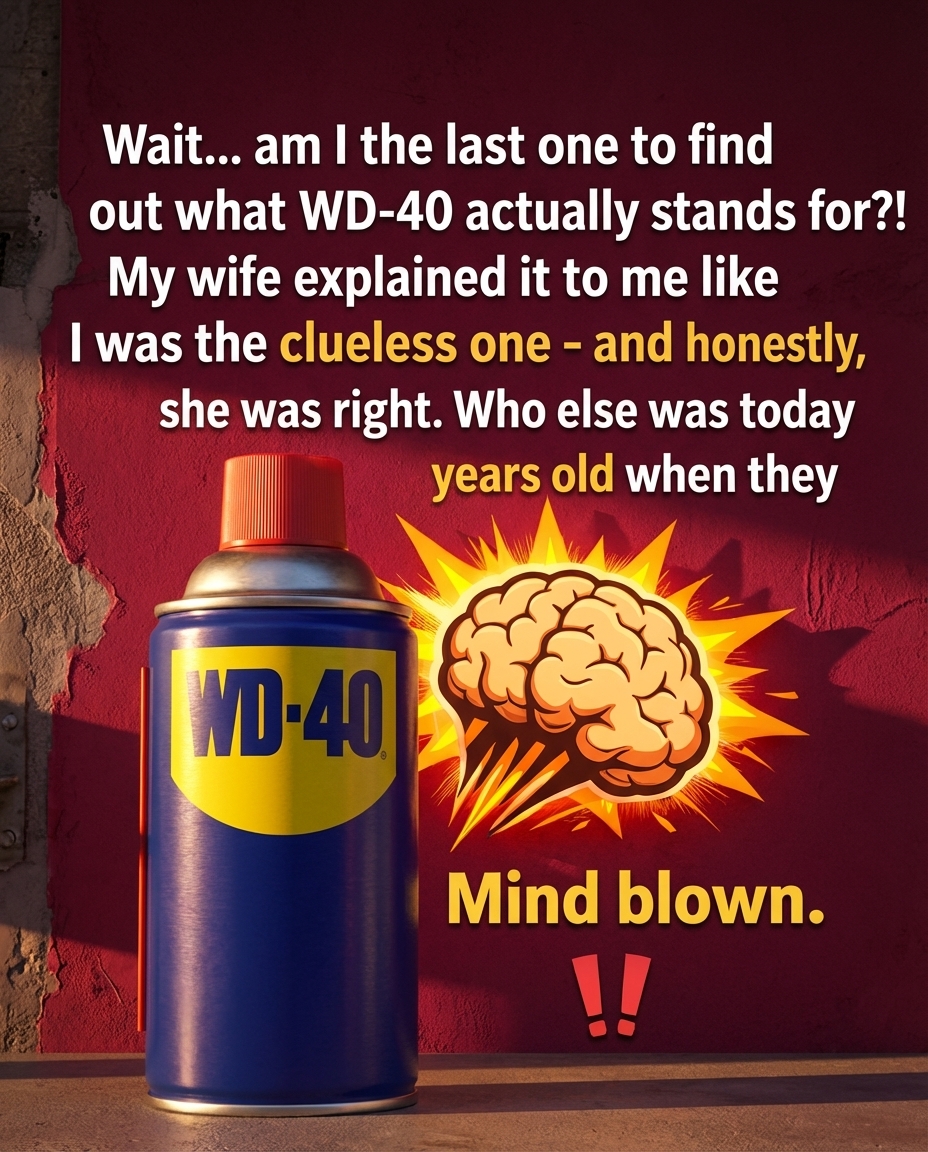
Formula after formula failed to perform as needed. Each attempt brought them closer, yet still short of success. It wasn’t until the fortieth try that the breakthrough finally came: a compound capable of displacing water effectively and shielding metal surfaces from corrosion. The name they assigned to it—WD-40—was never intended as branding. It was merely a practical label pulled straight from the lab notebook: Water Displacement, 40th formula. But the name stuck, just as the product itself would.
What followed was not an overnight marketing triumph, but a quiet expansion into everyday life. Initially used by engineers and mechanics, the product proved so reliable that it naturally began to migrate beyond industrial settings. Homeowners borrowed it for small repairs. Neighbors shared it for stubborn hinges, squeaky doors, rusted bolts, and tools in need of protection. Over time, WD-40 became synonymous with problem-solving—an all-purpose helper for the countless minor frustrations of daily living.
Its success was never driven by flashy campaigns or bold reinvention. Instead, it grew through trust and word of mouth, built on the simple fact that it worked. The familiar blue-and-yellow can became a symbol of practicality and persistence, a reminder that some of the most enduring innovations are born not from spectacle, but from patience, repetition, and a clear objective.
Decades later, WD-40 stands as proof that a modest solution, designed with purpose and refined through determination, can quietly outlast trends and earn a permanent place in everyday life. In solving small, often overlooked problems, it reshaped how people care for the tools and machines that keep the world moving—one simple spray at a time.