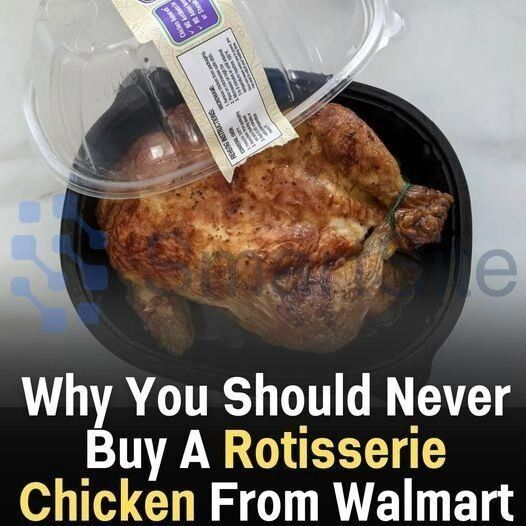
When it comes to rotisserie chicken, convenience and price often drive the decision—but a closer look suggests that Walmart’s popular option may not be the best value it appears to be. While the familiar $4.98 price tag can feel like a bargain—especially when the chicken is marked down—shoppers are actually getting less than they might expect. A Walmart rotisserie chicken weighs just under two pounds, coming in at approximately 1 pound, 13 ounces. For consumers focused on value per dollar, that smaller size matters.
For the same price, competitors offer significantly more. Both Sam’s Club and Costco sell rotisserie chickens that weigh around three pounds—roughly a full pound more meat for the exact same cost. That difference can translate into extra servings, better leftovers, or simply more value for families trying to stretch their grocery budget.
Although Sam’s Club is owned by Walmart, the rotisserie chicken offered there is a noticeably different product. The larger size alone sets it apart, aligning it more closely with Costco’s well-known offering. And beyond size, quality and consistency also come into play.
Customer feedback paints a mixed picture for Walmart’s rotisserie chicken. Reviews on Walmart’s own website frequently mention issues with uneven cooking, with some shoppers reporting dry, overcooked meat while others complain of undercooked portions. That inconsistency can be frustrating for a ready-to-eat product meant to be reliable and convenient.
Costco, by contrast, consistently ranks at the top in taste tests and customer satisfaction. Its rotisserie chicken is widely praised for being exceptionally juicy, well-seasoned, and evenly cooked. For many shoppers, it has become a benchmark against which all other grocery-store rotisserie chickens are judged. In side-by-side comparisons, Costco’s version often comes out on top, while Walmart’s tends to lag behind in both flavor and overall eating experience.
Ultimately, while Walmart’s rotisserie chicken may still appeal for its accessibility and low upfront cost, consumers looking for the best combination of size, taste, and value may want to look elsewhere. For the same $4.98, warehouse competitors deliver a larger bird and, according to many shoppers, a noticeably better meal.