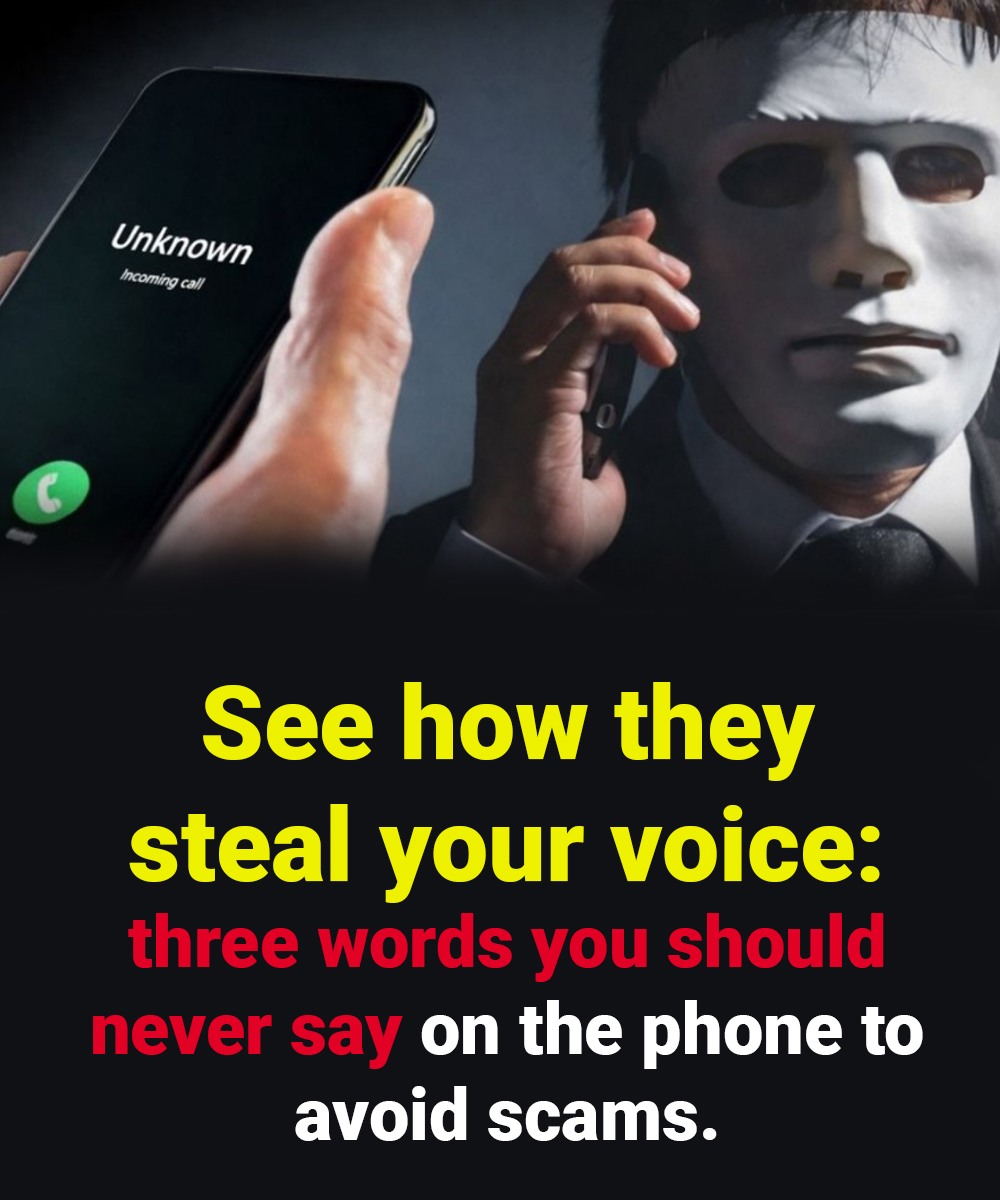
Artificial intelligence is no longer limited to writing text or generating images. Today, it has reached a far more personal and unsettling frontier: the human voice. With current technology, scammers no longer need long recordings or hours of audio to impersonate someone convincingly. In many cases, just a few seconds of speech—captured during an ordinary phone call—are enough to recreate a voice with disturbing accuracy.
This is why seemingly harmless responses such as “yes,” “hello,” or even a casual “uh-huh” can become tools for fraud, identity theft, and financial crime. Your voice is no longer just a way to communicate. It has become a form of biometric data, comparable in value and sensitivity to your fingerprint or facial recognition data.
In practical terms, your voice is now a digital signature.
Modern AI systems are capable of analyzing tone, rhythm, pitch, accent, and speech patterns to build a detailed vocal model. Once created, this model can reproduce your voice in a way that sounds convincingly real—even to people who know you well. With such a model in the wrong hands, criminals can impersonate you to family members, send voice messages requesting money, authorize transactions, or gain access to services that rely on voice authentication. All of this can happen without your knowledge or presence.
One particularly common tactic is known as the “yes” scam. It typically begins with a simple phone call from an unknown number. The caller asks an innocuous question—something designed to elicit a quick, affirmative response. When you answer “yes,” that audio is recorded. Scammers then manipulate or reuse the recording to fabricate consent for a contract, purchase, or authorization. In some cases, the recording is presented as supposed proof that you agreed to something, even though you never did.
For this reason, responding with direct affirmations to unknown callers is increasingly risky. Even saying “hello” can expose you. Many robocalls exist solely to confirm that a number is active and that a real person is on the line. Once you speak, the system not only verifies your number but may also capture enough audio to begin basic voice modeling.
A safer approach is to avoid speaking first. Let the caller identify themselves. Ask who they are and whom they are trying to reach. This shifts control of the interaction back to you and prevents your voice from being captured without context or consent.
What makes these scams especially dangerous is how believable they have become. Advanced voice-cloning tools use sophisticated algorithms to replicate emotional cues, adjust speed and accent, and simulate urgency, fear, or calmness. In a matter of minutes, criminals can generate audio that sounds authentic enough to deceive even cautious individuals. This is why many victims genuinely believe they are speaking to a relative, a bank representative, or a legitimate organization.
Protecting yourself does not require technical expertise—only awareness and consistent habits. Avoid saying “yes,” “confirm,” or “accept” to unknown callers. Always ask the caller to identify themselves first. Be wary of surveys and robocalls. Hang up immediately if something feels off. Regularly review your bank and account statements for unusual activity. Block and report suspicious numbers whenever possible. If someone claims to be a family member in distress, end the call and contact them directly through a number you trust.
Small changes in how you answer the phone can significantly reduce your risk.
In the age of artificial intelligence, your voice is no longer just sound—it is a key. Protecting it is just as important as safeguarding your passwords, financial information, and personal data. With a bit of caution and a few simple habits, you can continue to use your phone confidently without falling into invisible, technologically driven traps.