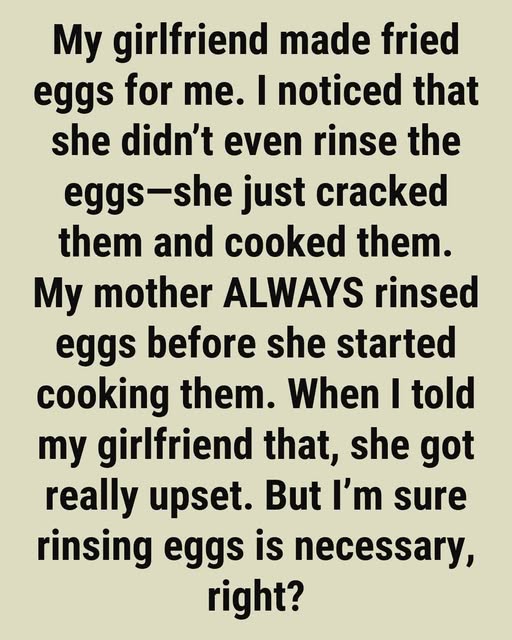
Most people are unaware that an egg is naturally equipped with its own form of protection. That nearly invisible outer layer, known as the cuticle or bloom, acts as a built-in shield. It seals thousands of microscopic pores in the shell, helping to block bacteria from entering while also slowing moisture loss and preserving freshness. This protective barrier forms as the egg is laid, and when it remains intact, it significantly reduces the risk of contamination.
The problem arises the moment a fresh, intact egg is washed under running water. While it may feel instinctively cleaner, washing actually removes the cuticle—the egg’s first and most effective line of defense. Once that layer is stripped away, bacteria on the shell’s surface can more easily penetrate through the pores, especially if the egg is exposed to temperature changes or improper storage. In trying to make the egg safer, you may inadvertently increase the very risk you were trying to avoid.
This does not mean eggs are inherently dangerous or that consumers should approach them with fear. Context matters. Eggs sourced from reputable producers and handled properly often arrive with shells that are already clean or only lightly soiled. In these cases, leaving them unwashed helps preserve the natural barrier that protects the egg from spoilage and contamination. Proper refrigeration and careful handling further reduce risk, while thorough cooking—particularly methods like boiling or fully cooking yolks and whites—adds an additional and highly effective layer of safety.
Food safety practices vary around the world, largely because of differences in production standards and handling before eggs reach consumers. But the underlying biology remains the same: the cuticle exists for a reason, and once removed, it cannot be restored.
Ultimately, the choice of whether to wash eggs rests with the individual. However, understanding what that thin, invisible coating does can inform better decisions. Sometimes, the safest approach is not intervention but restraint. When it comes to fresh eggs, leaving them alone may be the best way to let nature’s design do its job.