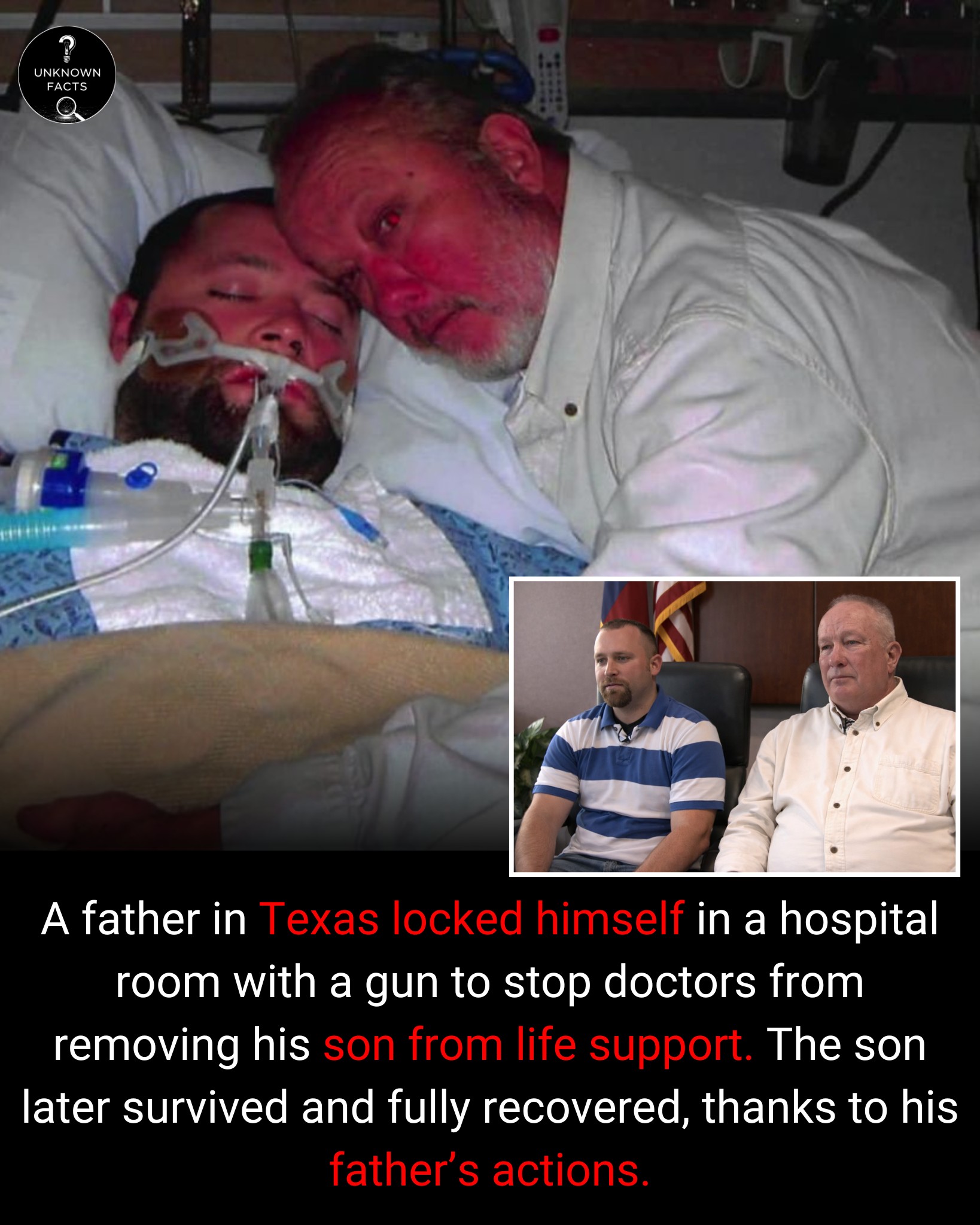
When doctors told him that his son was effectively gone, George Pickering II reached a point that few parents can imagine and even fewer are willing to cross. Medical charts had been filled out, decisions documented, and the language of finality had settled heavily over the room. Specialists spoke in calm, practiced tones about irreversible brain damage and the absence of meaningful recovery. To the hospital, the case was closed.
To Pickering, it wasn’t.
Against the weight of professional consensus, he clung to a quiet but unyielding instinct—something that lived deeper than statistics or protocols. He believed his son was still there. Not as a medical possibility, but as a human presence he could feel, however faintly. That belief would drive him into a confrontation that pushed him beyond hospital policy, beyond the law, and directly into the crosshairs of armed police.
What followed was a tense and surreal standoff. Pickering barricaded himself inside the hospital room, refusing to allow life support to be withdrawn. Outside, administrators called for law enforcement. A SWAT team assembled. Weapons were trained on a father who, hours earlier, had been nothing more than a desperate man begging for time. In that sealed room, surrounded by machines and authority, Pickering made a single demand: give his son more time.
He wasn’t asking for miracles or guarantees. He was asking for hours.
In those hours—time he took by force rather than permission—something happened that would unravel the certainty of everyone involved. Pickering’s son responded. A squeeze of the hand. Subtle movement. Signs that contradicted the clinical finality of earlier assessments. The young man who had been written off as beyond recovery, whose body was already being considered for organ donation, began to show unmistakable signs of life.
Medical opinion shifted. The diagnosis that had seemed absolute cracked under new evidence. Slowly, against expectations, the son regained consciousness and began a path toward recovery. He would eventually leave the hospital alive—something that had been deemed impossible only days earlier.
The cost of that outcome was severe. Pickering was arrested, charged, and later sentenced to prison for his actions during the standoff. The law did not weigh intent against outcome. A crime had been committed, and punishment followed. One man went to prison. The other went home.
Today, both live with the weight of what happened. A father who broke the law out of love. A son who survived because someone refused to let go when every system around him had already moved on. Their story sits in a deeply uncomfortable space—where legal boundaries, medical authority, and parental instinct collide.
It raises questions without easy answers. About certainty in medicine. About who gets the final say when life hangs in the balance. About whether an act can be both criminal and redemptive at the same time.
What remains undeniable is this: a death sentence was rewritten, not by protocol or prediction, but by a father who believed that time—just a little more of it—was worth any cost.