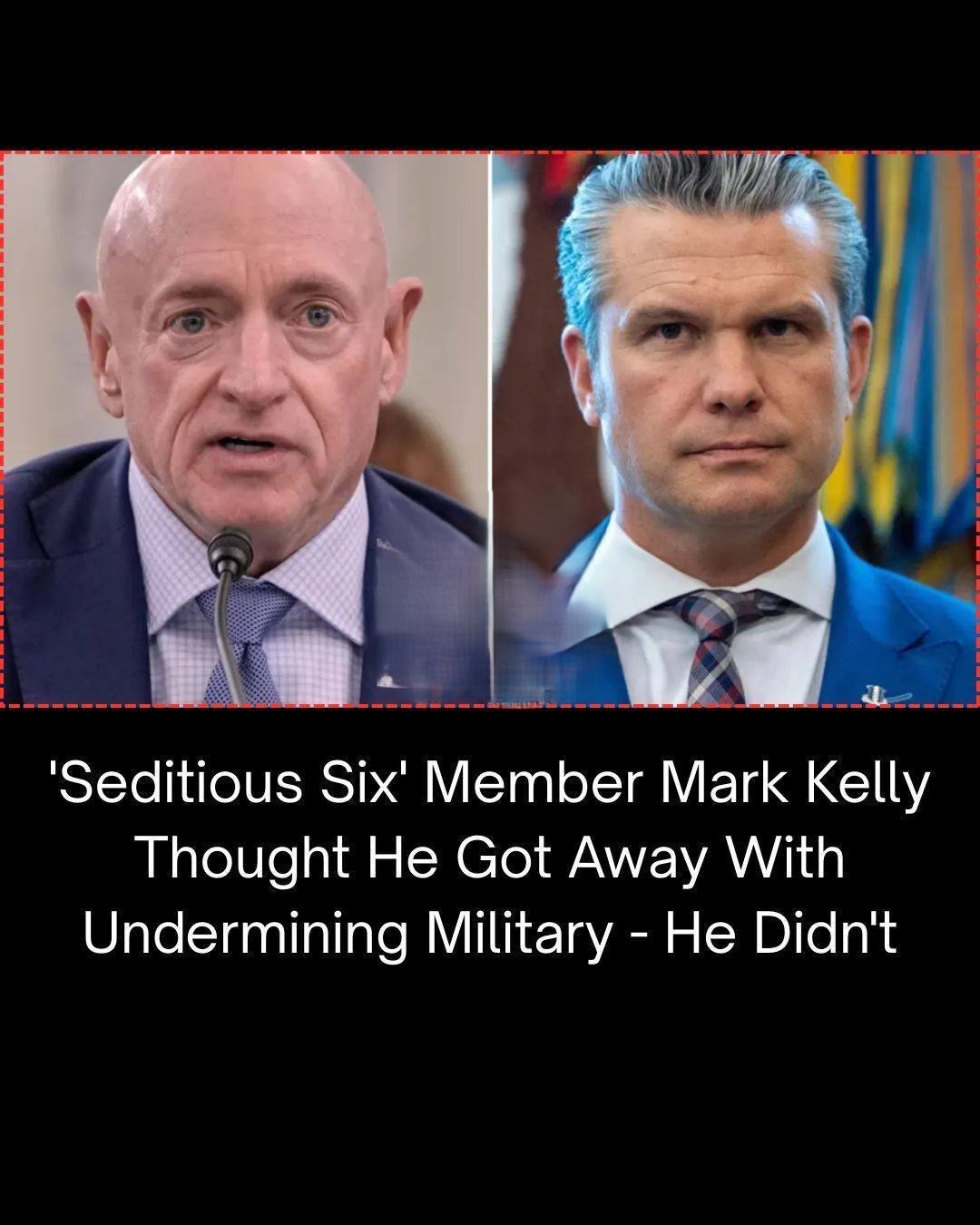
The Pentagon’s decision to elevate its internal review into a formal Command Investigation represents a dramatic and consequential turn for Mark Kelly, transforming what supporters framed as political expression into a matter with potentially serious professional and legal implications. What initially appeared to be a provocative political message has now entered the rigid, unforgiving framework of military oversight—where intent, wording, and impact are assessed not through partisan lenses, but through strict standards of discipline, authority, and national security.
At the center of the controversy is Kelly’s appearance in a video urging members of the armed forces and the intelligence community to refuse what he described as “unlawful” orders. Critics argue that this crossed a critical boundary. In the military context, encouraging service members to question or disobey orders—outside established legal and command channels—can be interpreted not as dissent, but as an attempt to undermine the chain of command. By stepping into this space, Kelly and his allies moved beyond rhetorical debate and into territory the military treats with exceptional gravity.
With the launch of a Command Investigation, the stakes have escalated sharply. Unlike a preliminary review, this process grants investigators the authority to compel sworn testimony, examine communications and conduct in detail, and recommend punitive or administrative actions if violations are found. Such investigations are designed to determine whether conduct threatens good order and discipline, or undermines confidence in lawful authority—core pillars of military functioning that the Pentagon does not compromise on, regardless of political stature.
Kelly, a former military officer and astronaut, has pushed back forcefully, characterizing the investigation as a politically motivated attack intended to silence criticism and intimidate dissenting voices. He has framed himself as the target of a vendetta, arguing that his comments were meant to defend constitutional principles rather than erode them. However, officials at the U.S. Department of Defense have so far avoided political language, instead emphasizing procedural necessity and institutional responsibility. Their measured tone suggests the matter is being treated as a serious question of conduct, not a partisan spectacle.
Regardless of the final outcome, the implications extend well beyond Kelly’s personal or political future. The case highlights a growing tension between elected officials and the military establishment at a time when trust is already strained. For many in uniform, the perception that political figures are encouraging selective obedience to orders strikes at the heart of military cohesion. For civilian leaders and activists, the investigation raises concerns about the limits of speech and the line between advocacy and interference.
As the process unfolds, it will test not only Kelly’s defense but also the broader relationship between America’s civilian leadership and its armed forces. The outcome may help define how far political actors can go when addressing service members directly—and where the military draws an immovable line. Whatever conclusion investigators reach, this confrontation between a group critics have labeled a “seditious six” and the defense establishment is likely to leave a lasting mark on civil–military relations in the United States, deepening questions about authority, accountability, and the fragile bond between those who govern and those who serve.