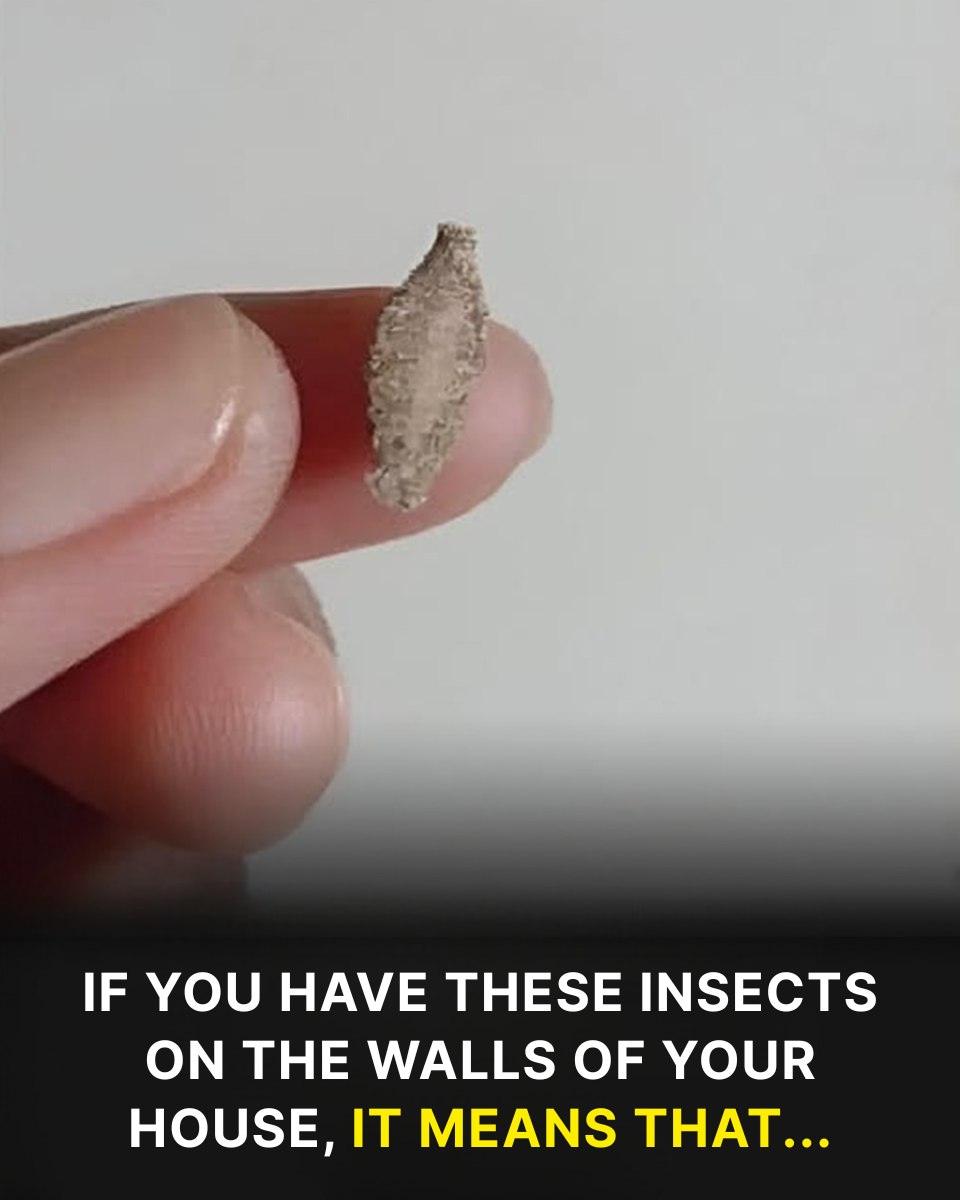
Many people have come across them at some point without knowing exactly what they are.
Small, discreet, and almost motionless, they often appear attached to walls, ceilings, or little-used corners of the home. At first glance, they may look like bits of dust or tiny pieces of dirt, but they are actually a very particular insect: the case-bearing moth, scientifically known as Tinea pellionella.
Although their presence can cause surprise or unease, their behavior is far more curious than dangerous.
A Larva That Carries Its Own Shelter
The most striking feature of this species is its larval stage. Unlike other household moths, the larva of the case-bearing moth moves around carrying a kind of small bag or case, which serves a dual purpose: it protects the larva and provides a source of food. This tiny case is actually built by the larva itself, using materials found in its immediate surroundings.
A Case Made From Everyday Materials
Hair, textile fibers, leaf fragments, clothing threads, grains of sand, dust, or tiny bits of plant or animal matter can all become part of this portable structure. For this reason, the color and texture of the case vary depending on where the larva lives and what materials are available. In some homes it may appear darker, in others lighter, blending in with the surface it moves across and allowing it to go largely unnoticed.

Where They Are Usually Found
These cases are typically found in sheltered places such as corners, behind furniture, on high ceilings, or in areas that are not cleaned frequently. There, the larva moves slowly, barely sticking out part of its body to advance before retreating back into its shelter. This behavior has fascinated specialists and curious observers for years, as it represents a highly effective survival strategy.
The Life Cycle of the Case-Bearing Moth
The life cycle of the case-bearing moth begins when the adult female lays between 35 and 50 eggs on surfaces close to food sources. These eggs usually hatch after about seven days, giving rise to larvae that almost immediately begin building their characteristic cases. From that moment on, their main activities are feeding and growing until their development is complete.
What These Larvae Feed On
The larvae feed on materials that contain keratin, a protein found in substances of animal origin. This is why they can consume feathers, wool, leather, insect remains, paper, and even organic particles found in household dust. Even so, their rate of consumption is slow and limited, which explains why they rarely cause visible or significant damage in homes.
Are They a Pest?
Unlike other moth species associated with clothing or food, the case-bearing moth is not considered a pest. Its presence does not imply a dangerous infestation, nor does it pose a direct risk to human health. In most cases, its appearance is linked to environments where dust, fibers, or organic debris accumulate—something common in any household.

How to Control Them Naturally
For this reason, the best method of control does not require chemical products or aggressive measures. A thorough and regular cleaning of the home is usually more than enough to reduce their presence. Vacuuming carpets, cleaning hard-to-reach corners, removing cobwebs, and keeping areas where textiles or papers accumulate well organized helps eliminate both the larvae and the conditions that favor their development.
It is also advisable to ventilate rooms and pay attention to closets, storage areas, and spaces with little air circulation. In most cases, once dust and food sources are removed, the larvae simply disappear without the need for further action.
A Small Part of the Home’s Natural Balance
Although some people may find them unpleasant to look at, these moths are part of the natural balance of domestic ecosystems. Their role, to some extent, is to contribute to the breakdown of organic debris, helping recycle materials that would otherwise build up.
Knowing what they are and how they live makes it easier to see their presence from a different perspective. Far from being a cause for alarm, the appearance of the case-bearing moth is, in most cases, simply a sign that the home could benefit from a more detailed cleaning. Understanding their behavior allows you to respond calmly, with information and effectiveness, without unnecessary worry.