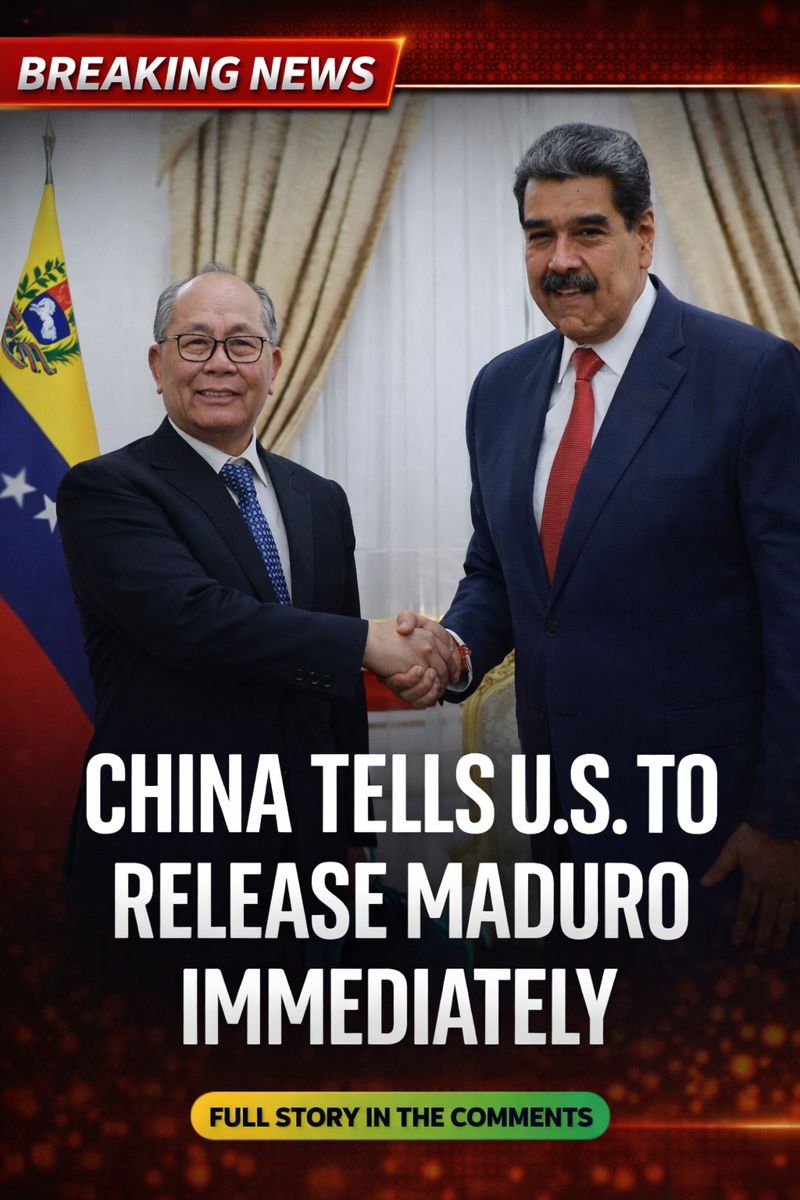
In the span of a single day, Washington found itself confronting two crises that underscored the growing costs of confrontation, rhetoric, and global power projection. What initially appeared as separate incidents quickly merged into a broader warning sign: the United States is no longer navigating a geopolitical landscape where pressure can be applied without consequence—especially in Latin America.
The first shock came from China, whose blunt demand for the release of Nicolás Maduro went far beyond routine diplomatic protest. Beijing’s statement was not subtle, nor was it symbolic. By publicly tying its prestige to the fate of a deeply controversial Latin American leader, China sent a clear message that it is prepared to confront the United States directly in regions long considered part of Washington’s sphere of influence.
For years, U.S.–China rivalry has played out in the South China Sea, over Taiwan, and through trade and technology restrictions. This moment marked something different. By stepping into the Venezuelan crisis so openly, Beijing signaled its willingness to challenge American authority in the Western Hemisphere itself. The demand tested not only U.S. resolve, but its moral framing—forcing Washington to justify whether its actions were about law enforcement and stability, or raw power exercised under the banner of order.
Almost simultaneously, a second crisis erupted—this time triggered by words rather than formal diplomacy. Donald Trump publicly referred to the president of Colombia as a “sick man” and suggested he “won’t be in power for long.” What might once have been dismissed as provocative rhetoric landed very differently in the current climate. For Colombians, the remarks sounded less like insult and more like an implied threat. For neighboring governments, they revived a long-standing anxiety about external interference disguised as political commentary.
The reaction across the region was swift and uneasy. Latin American leaders, already balancing relations between Washington and Beijing, were forced to reassess their assumptions. Trump’s comments echoed a historical fear that has never fully faded: that the United States still views Latin America not as a collection of sovereign democracies, but as a strategic chessboard—one where leaders can be pressured, removed, or dismissed when they fall out of favor.
Taken together, the two events exposed a deeper vulnerability in U.S. global positioning. China’s demand challenged American authority from the outside, while Trump’s remarks strained relationships from within. One tested U.S. power on the international stage; the other tested its restraint and credibility in a region where trust has always been fragile.
For Washington, the timing could not have been worse. As global alliances shift and multipolar competition hardens, every statement and decision carries amplified consequences. Beijing’s intervention suggests that China is no longer content to remain a background player in Latin America. Trump’s rhetoric, meanwhile, risks reinforcing narratives that make it easier for rivals to present themselves as alternatives to U.S. influence.
What remains is a region caught in the middle—Latin American nations navigating between rival powers, wary of being pulled into confrontations not of their choosing. The question now facing Washington is whether it can recalibrate its approach before rhetoric and rivalry turn into lasting damage.
Because in a world where power is increasingly contested, storms rarely arrive one at a time—and the ones you create yourself are often the hardest to escape.