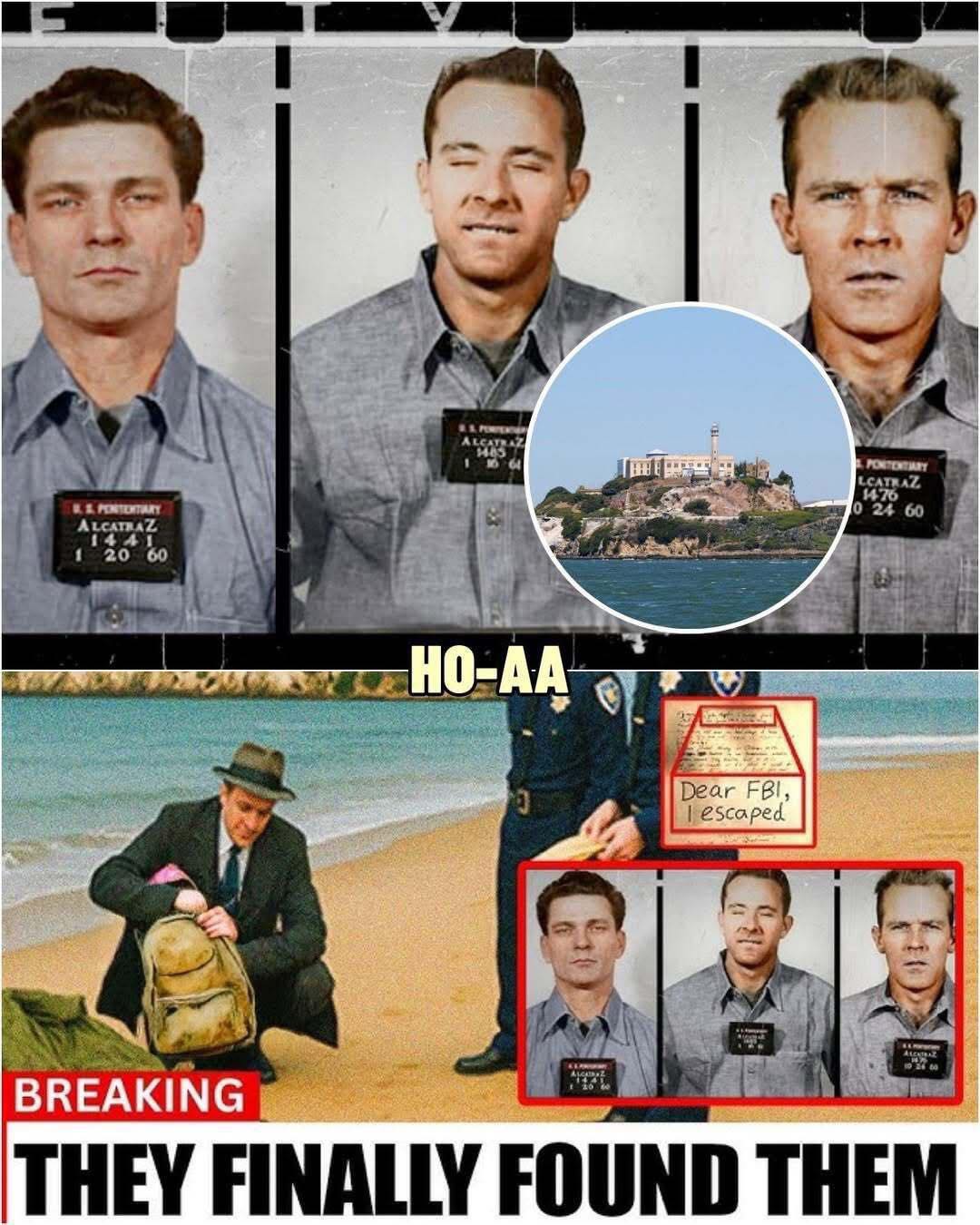
The escape from Alcatraz endures because it cuts straight to something primal: the eternal clash between absolute control and the human refusal to be caged. When Frank Morris and the Anglin brothers vanished from their cells in June 1962, they didn’t just break out of a prison. They challenged the very idea that a system designed to be infallible could ever truly be airtight.
Alcatraz was meant to embody certainty. Surrounded by icy, fast-moving water, reinforced by rigid routines and constant surveillance, it promised the public that escape was impossible. The men held there were the ones other prisons could not control. In that context, Morris and the Anglin brothers’ disappearance was more than an embarrassment—it was a direct wound to institutional pride.
What makes the story linger is not simply the ingenuity of the escape itself, but everything that followed. No bodies were conclusively recovered. No definitive proof of death was ever produced. Instead, the decades filled with fragments: reports of debris in the bay, sightings in South America, a postcard here, a letter there, a blurred photograph that might—or might not—show the brothers years later. Each unanswered question widened the gap between official conclusions and public doubt.
If the men drowned, then Alcatraz kept its grim promise. Their final moments would have been spent battling freezing water, darkness, and exhaustion—an escape paid for with their lives. In that version of events, the mystery is tragic but contained. The prison remains undefeated, and the escape becomes a cautionary tale about the limits of human defiance.
But if they survived, the implications are far more unsettling. It would mean that three men outwitted not just guards and walls, but an entire system built on the assumption of total control. Survival would have required them to erase themselves—to abandon their names, their pasts, and the notoriety that would have followed them forever. In that scenario, freedom came at the cost of identity, traded quietly in some distant town where being unknown was the ultimate victory.
This tension—between death and disappearance, failure and triumph—is why the Alcatraz escape refuses to close. The story exists in a permanent state of suspension, balanced between two endings that say very different things about power and resistance. It is less about whether Morris and the Anglins lived or died, and more about what people want to believe.
For authorities, a closed case restores order. For the public, uncertainty keeps the legend alive. Every new theory, every rediscovered document, every aging photograph reopens the question because it speaks to a deeper fascination: the hope that even the most absolute systems can be broken, and that somewhere, against all odds, someone might have slipped through the cracks.
In the end, the Alcatraz escape became larger than the men themselves. It is no longer just a prison break, but a modern myth—one that lives in the space between triumph and tragedy, daring anyone who hears it to decide which ending feels more true.