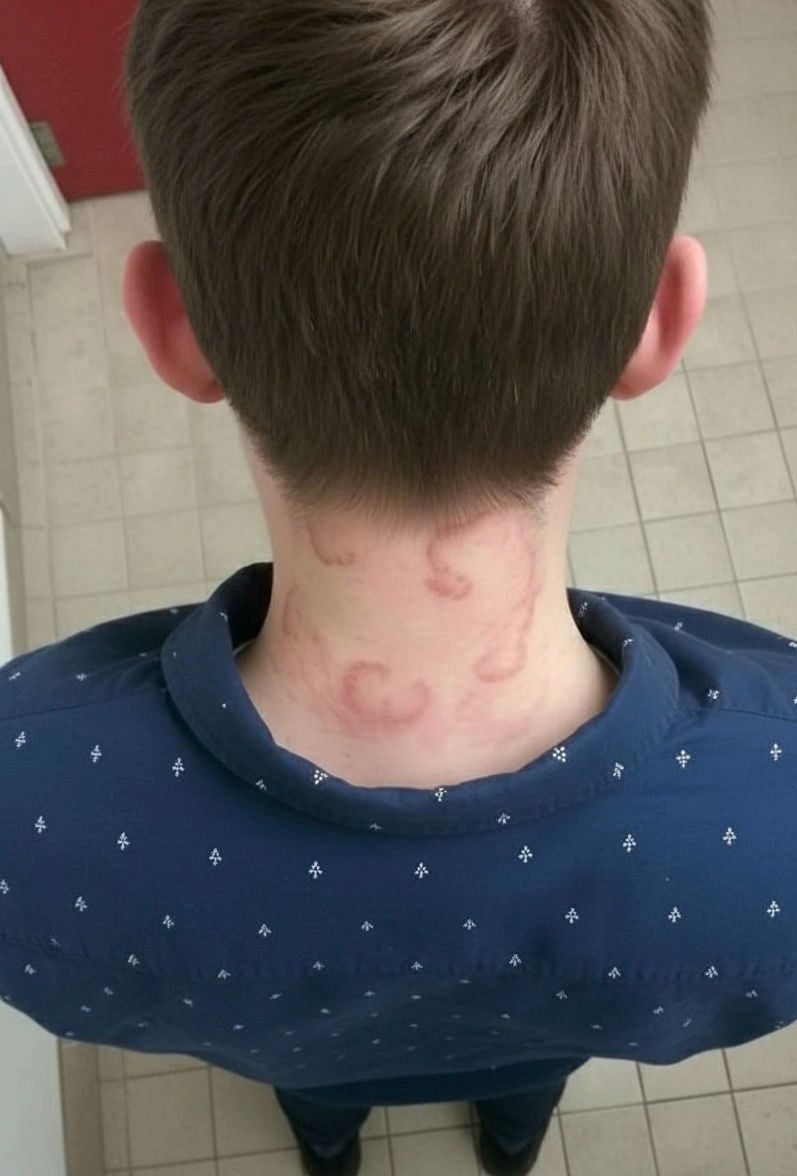
What began as a simple, almost forgettable itch quickly evolved into a sobering lesson about how aggressive and dangerous urticaria can become when the body’s immune response spirals out of control. The raised, red welts spreading across his skin were not merely a cosmetic irritation; they were a visible warning sign of a deeper process unfolding beneath the surface. Inside his body, mast cells were releasing powerful chemical mediators into the bloodstream, causing tiny blood vessels to leak fluid into the surrounding tissue. The result was swelling, heat, and an intense urge to scratch that no amount of distraction could ease.
As the reaction intensified, the condition progressed into angio-oedema, a more serious and potentially life-threatening complication. His lips and eyelids began to swell dramatically, distorting his appearance and amplifying fear. When swallowing became uncomfortable and his throat felt tight, concern turned into urgency. What had started as a nuisance was now a medical situation that demanded immediate attention.
Doctors worked quickly to stabilize the reaction while searching for possible triggers. Urticaria can be provoked by a wide range of factors—certain foods, medications, viral or bacterial infections, insect stings, environmental allergens, and even emotional stress. In many cases, the cause remains elusive. Physicians needed to determine whether this episode represented acute urticaria, which often resolves within days or weeks, or chronic urticaria, a condition that can persist for months or years without a clear explanation.
Treatment focused on calming the immune response and relieving symptoms. Antihistamines formed the foundation of care, helping block the chemicals responsible for swelling and itching. In more severe flares, short courses of corticosteroids were used to reduce inflammation rapidly. Cooling agents such as menthol creams provided additional relief, soothing the skin and easing discomfort during recovery.
Over time, the flare-ups came under control, but the experience left a lasting impact. He learned to monitor his body closely, avoid identified triggers, and respond quickly to early warning signs. Most importantly, he understood that swelling around the face, lips, or mouth should never be ignored, as it can escalate rapidly and compromise breathing.
What once seemed like “just hives” became a powerful reminder that skin reactions are not always superficial. They can signal a systemic immune response with serious consequences. Prompt medical care, informed self-management, and respect for the body’s signals can make the difference between a manageable episode and a life-threatening emergency.