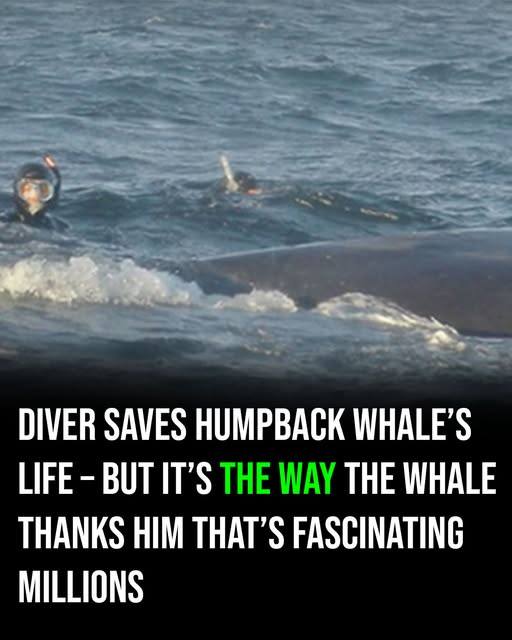
The moment James entered the water, it was immediately clear this was not a spectacle or a dramatic display of wildlife behavior. It was a plea for help. The humpback whale should have been moving freely—diving deep, feeding, vanishing into open blue water. Instead, it remained unnaturally still, hovering near the surface, one eye fixed on the human beside it. The animal appeared to be making a calculation: flee from a perceived threat or place its survival in human hands.
That calculation became horrifyingly tangible when James discovered the cause. A 3,000-pound anchor and nearly a mile of heavy chain were tightly cinched around the whale’s tail, cutting deep into the flesh. The massive animal was not lingering out of curiosity—it was trapped. The restraint was not natural, not accidental in any benign sense. It was the direct result of human negligence. And only human intervention could undo it.
What followed was not cinematic heroism, but slow, grueling, methodical work. Each dive was a test of endurance. Each cut of the knife required precision, timing, and trust—on both sides. The water was cold. Air was limited. Muscles burned as steel links resisted every effort to free them. The whale, capable of overpowering any human in an instant, remained remarkably still. It surfaced only to breathe, then returned to position, allowing the rescuers to continue their work.
There were no dramatic flourishes, no triumphant music—only concentration, exhaustion, and the constant risk that one sudden movement could end the operation, or a life. The team worked steadily, cutting metal away from flesh, dismantling a prison built by carelessness piece by piece.
When the anchor finally dropped and the last length of chain slipped free, the ocean fell into an unexpected stillness. The whale was no longer bound. It was free to disappear into the depths at any moment. But it did not.
Instead, the humpback circled James slowly, deliberately, staying close. The movement felt intentional, almost measured—an acknowledgment rather than a display. Then, without haste, it turned and swam away.
It was not a moment of dominance or victory. It was something rarer: a silent exchange of trust between vastly unequal beings. A reminder that while human actions can inflict immense harm, they can also restore what was broken—and that even in the wild, power does not always answer fear with force, but sometimes with grace.