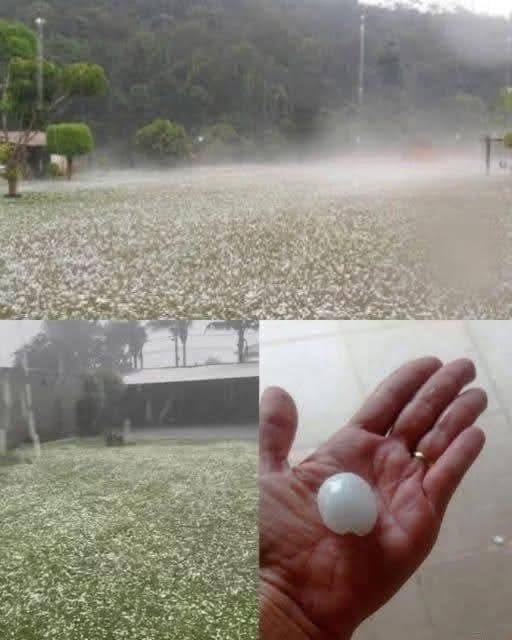
When the storm finally passed, the town emerged into an unsettling quiet, broken only by dripping water and the distant wail of sirens. Jagged mounds of hail and debris covered lawns, while cars sat battered and unrecognizable, their windshields shattered or crushed inward. Residents stepped outside slowly, stunned by the scale of the damage, exchanging stories of close calls and frantic moments spent scrambling for shelter, still tensing at every low roll of thunder in the distance.
Emergency crews moved methodically through blocked streets, checking on elderly residents and beginning the long process of assessing damage. Power flickered on and off in several neighborhoods, forcing families to gather by flashlight, scrolling through photos of wrecked vehicles and broken roofs while sharing a collective relief that no lives had been lost. The air carried a mix of emotions—shock at what had been destroyed, anger at the suddenness of it all, and gratitude that the outcome had not been worse.
In the span of a single night, the storm had reshaped the town’s landscape and its perspective. It served as a stark reminder of how fragile normal life can be, and how quickly it can be disrupted. Yet as the clouds thinned and the sky began to clear, there was also a quiet sense of unity. Amid the damage and uncertainty, neighbors stood together, grateful to still be there, facing what came next side by side.