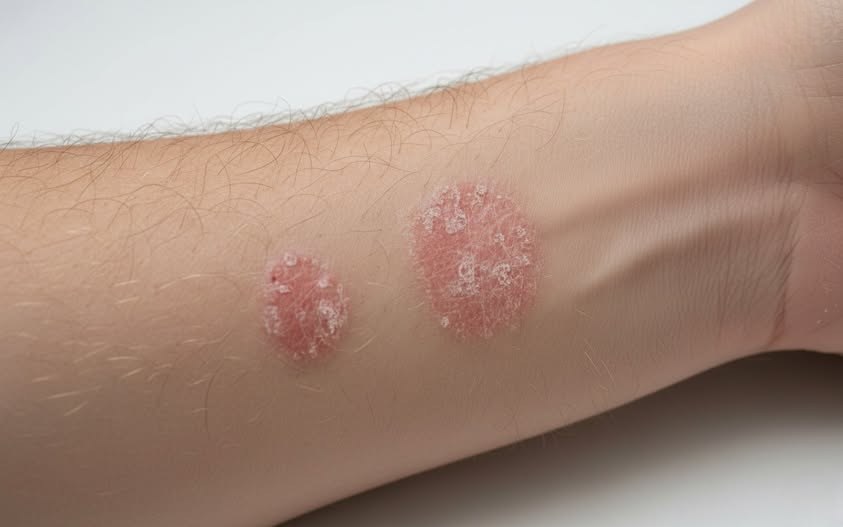
Types of Psoriasis
Psoriasis isn’t a one-size-fits-all condition. It presents in several distinct forms, each with its own appearance, triggers, and level of severity. Understanding the differences can help with early recognition, proper treatment, and realistic expectations.
Plaque Psoriasis
This is the most common type, accounting for the vast majority of cases. It’s characterized by well-defined, red, raised patches of skin covered with thick, silvery-white scales. These plaques most often appear on the scalp, elbows, knees, and lower back, though they can develop anywhere. The lesions may itch, crack, or even bleed, especially when the skin becomes dry or irritated.
Guttate Psoriasis
More frequently seen in children and young adults, guttate psoriasis appears as small, drop-shaped pink or red spots scattered across the trunk, arms, and legs. It often develops suddenly and is commonly triggered by infections such as strep throat. While it can resolve on its own, some cases progress into chronic plaque psoriasis.
Pustular Psoriasis
This type is less common but more dramatic in appearance. It causes red, inflamed skin topped with white or yellowish pus-filled blisters (pustules). Despite how it looks, the pus is not infectious. Pustular psoriasis can be localized — often affecting the palms and soles — or generalized, which can be serious and require urgent medical attention.
Inverse Psoriasis
Inverse psoriasis develops in skin folds where friction and moisture are common, such as under the breasts, in the groin, between the buttocks, or in the armpits. Instead of thick scales, the skin appears smooth, shiny, and intensely red. Because of its location, it’s often mistaken for fungal or bacterial infections.
Erythrodermic Psoriasis
This is the rarest and most severe form. It involves widespread redness, peeling, and inflammation covering large areas of the body, sometimes nearly the entire skin surface. Symptoms may include severe itching, pain, fever, chills, and fatigue. Erythrodermic psoriasis is a medical emergency and requires immediate treatment.
Is Psoriasis Contagious?
No. Psoriasis is not contagious. It cannot be spread through touch, skin contact, sharing personal items, or close physical interaction.
Psoriasis is an autoimmune condition, meaning the immune system mistakenly attacks healthy skin cells, causing them to grow too quickly. The result is inflammation and the buildup of skin plaques — not an infection.
Unfortunately, misconceptions persist. People living with psoriasis often face unnecessary social discomfort or stigma. The reality is clear: you cannot “catch” psoriasis from someone else.