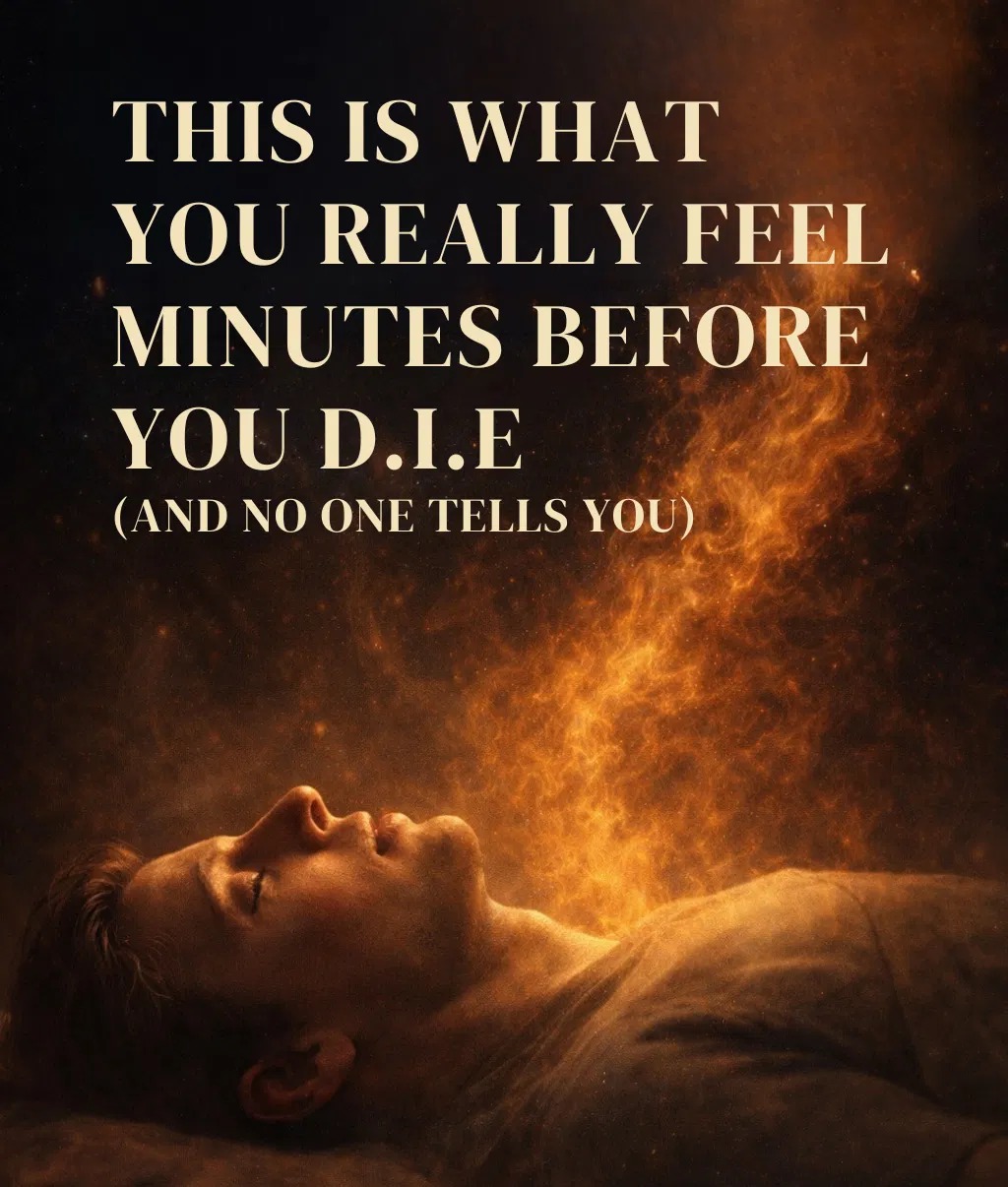
Death has always been one of humanity’s greatest unanswered questions. Science has learned a great deal about what happens to the body as life comes to an end, yet many aspects remain deeply personal and difficult to measure. Alongside medical explanations, there are countless accounts from people who say they briefly crossed the boundary between life and death and returned with powerful memories.
By looking at both scientific research and personal testimony, a clearer picture begins to form of what may happen in the body, the brain, and the mind during the final moments of life.
What science shows in the minutes before death
Doctors and researchers have closely observed what happens when the body begins to shut down, both in terminal patients and in people who were revived after clinical death.
One of the earliest changes is a drop in oxygen levels. As oxygen decreases, people often experience blurred or tunnel vision, ringing in the ears, dizziness, and a fading awareness of their surroundings. Research from the University of Michigan suggests that when oxygen is limited, the brain activates areas linked to memory and visual imagery. This may help explain reports of bright lights or sudden, vivid recollections.
Another surprising finding is that the final moments are not always filled with pain. Studies published in medical journals such as The Lancet indicate that the brain releases large amounts of endorphins and calming neurotransmitters. These chemicals can create a sense of peace or even euphoria, helping reduce stress and fear as the body shuts down.
In recent years, scientists have also observed a brief surge in brain activity just before death. A 2022 study using EEG monitoring found a spike in gamma waves, which are normally associated with heightened awareness, focus, and memory. This suggests that the brain may enter a final state of intense activity before consciousness fades.
As the nervous system weakens, the senses gradually disconnect. Touch, sight, and awareness diminish, but hearing often remains active until very late. This is why doctors and caregivers encourage speaking gently to people who are dying, as they may still be able to hear familiar voices.
What many people describe experiencing

Beyond what can be measured in a laboratory, there are thousands of personal accounts from people who survived near death experiences. While these stories cannot prove what happens after death, they share striking similarities.
Many describe a sensation of leaving their body and observing the scene from above. Neuroscientists link this to activity in the temporoparietal region of the brain, which helps create our sense of self and physical position. From a spiritual perspective, this moment is often described as consciousness separating from the body.
A deep sense of calm is another common theme. Fear seems to disappear, replaced by an overwhelming feeling of peace. For science, this aligns with the chemical changes taking place in the brain. For others, it feels like entering a state beyond ordinary awareness.
Encounters with light or with deceased loved ones are also frequently reported. Some researchers believe these visions are tied to memory and emotional centers in the brain becoming highly active. Spiritual interpretations view them as moments of connection beyond physical life.
Many people also speak of a life review, where memories appear rapidly and clearly, as if watching their life unfold all at once. Scientists suggest this may be the brain’s final attempt to organize stored information. Spiritually, it is often seen as a moment of understanding and reflection.
Death as a transition, not an ending
Across cultures and belief systems, death is often described not as a final stop, but as a transition. While science focuses on the body’s shutdown, spiritual traditions speak of expansion rather than loss.
Common ideas appear again and again. The body weakens, but awareness feels larger. Fear fades and is replaced by calm. Emotional bonds do not vanish instantly.
Eastern philosophies, ancient traditions, and modern spiritual thought all suggest that death represents a change of state rather than disappearance. From this view, science and spirituality are not in conflict. They describe different aspects of the same moment.
As the body powers down, the mind and consciousness may enter a unique state where time, identity, and perception no longer function as they normally do. This combination of biology and inner experience makes the final moments of life deeply meaningful.
Conclusion
What happens in the minutes before death appears to be a complex blend of physical processes and profound inner experiences. The body releases calming substances. The brain shows unexpected bursts of activity. Consciousness seems to shift in ways that are still not fully understood.
Science explains part of the picture. Personal and spiritual experiences fill in another. Together, they offer a more human understanding of death, not only as an ending, but as a moment of transition, reflection, and meaning.