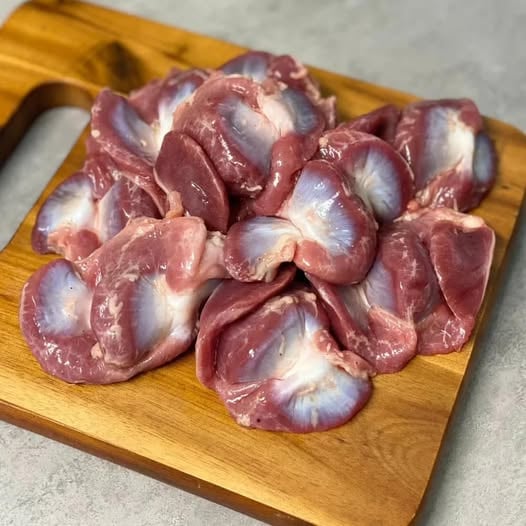
Many people overlook the chicken gizzard without realizing the remarkable role it plays in a bird’s digestive system. The gizzard functions as the chicken’s natural grinding mechanism — a compact but powerful muscular organ that constantly works to break down grains, seeds, and other food the bird consumes. Because chickens do not have teeth, this muscle performs the essential work of crushing and processing food, often with the help of tiny stones or grit the bird swallows. The result of this continuous activity is a cut of meat that is naturally firm, lean, and nutritionally dense.
From a nutritional standpoint, chicken gizzards offer an impressive profile that often goes unnoticed in modern diets. They are rich in high-quality protein while remaining relatively low in fat compared with many other cuts of meat. In addition, gizzards contain significant amounts of essential nutrients such as vitamin B12, iron, zinc, and selenium — elements that support energy production, immune health, and proper red blood cell function. For individuals and families trying to stretch their food budgets while still maintaining a balanced diet, gizzards provide an uncommon combination: affordability, nutritional value, and culinary flexibility.
Despite these advantages, gizzards have developed a reputation for being tough or difficult to cook, largely because they are often prepared incorrectly. Their muscular structure means they require either patience or the right cooking method to reach their full potential. When handled without care, they can indeed become chewy and unappealing. However, when cooked properly, they transform into a deeply flavorful and satisfying ingredient that holds its own alongside far more expensive meats.
A slow, gentle simmer can gradually break down the muscle fibers, producing tender pieces that work beautifully in soups, stews, and traditional comfort dishes. In many cuisines around the world, gizzards are simmered for hours until they become soft enough to absorb rich broths and spices. Alternatively, once tenderized, they can be quickly sautéed or stir-fried, creating a dish that is both hearty and packed with flavor.
Another popular preparation is frying. When lightly breaded and fried at the right temperature, gizzards develop a crisp outer layer while maintaining a tender interior, resulting in bite-sized pieces that are savory and addictive. Grilling or slow-cooking them with herbs and spices can also highlight their deep, meaty flavor, producing dishes that rival far pricier cuts of poultry or beef.
In an era when food prices continue to rise and many grocery store shelves are filled with highly processed options, chicken gizzards represent something increasingly rare: a traditional ingredient that remains both wholesome and affordable. They remind cooks that some of the most valuable foods are often the ones hidden in plain sight — overlooked not because they lack quality, but simply because fewer people remember how to prepare them well.
For those willing to rediscover them, chicken gizzards offer more than just a budget-friendly meal. They represent a return to practical cooking, where every part of the ingredient is respected, every nutrient counts, and real value is found not in convenience, but in thoughtful preparation and time-honored techniques.