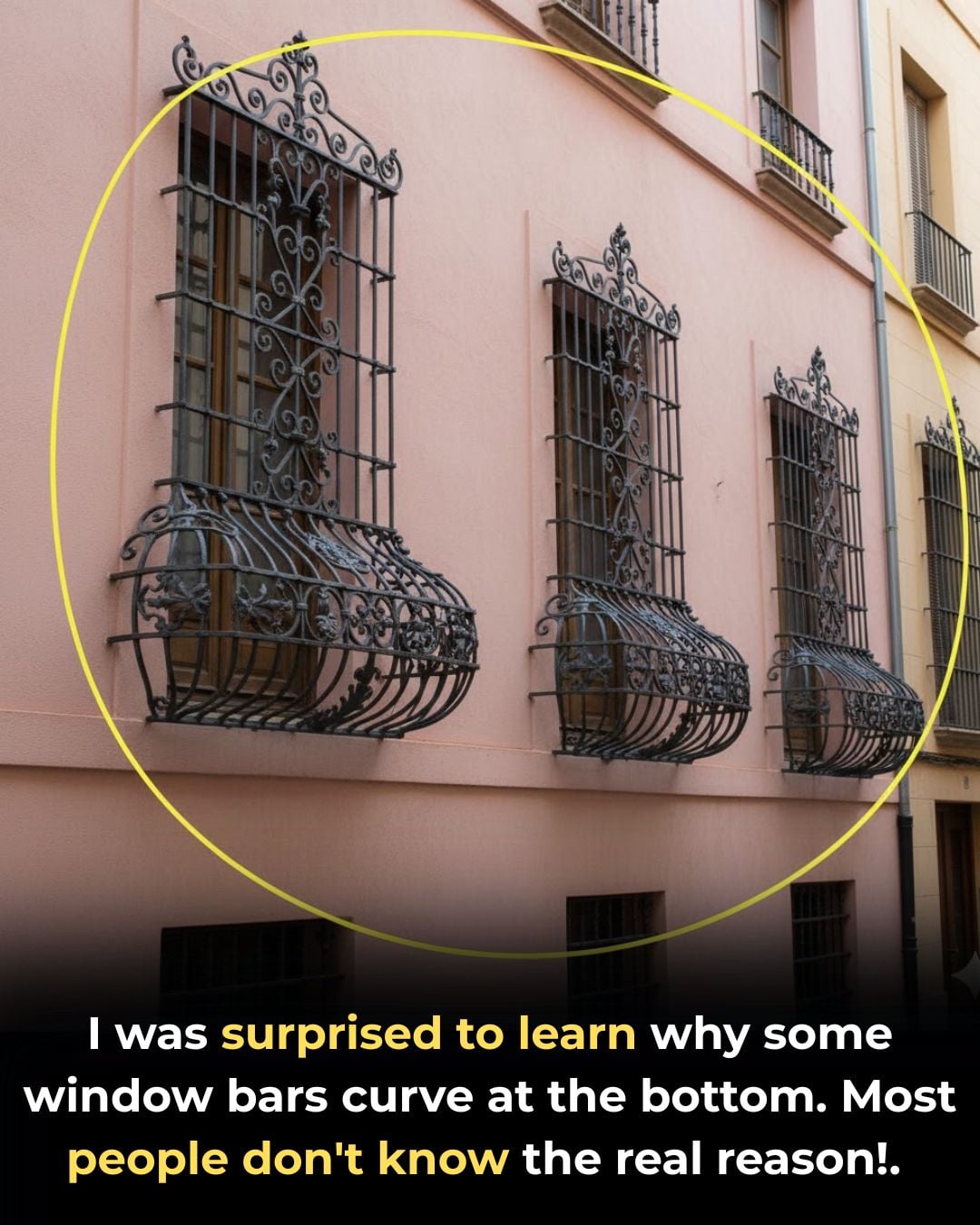
At first glance, the slight downward curve seen in many metal window guards may appear to be a flaw—an unintended sag caused by time, weight, or wear. In reality, it is anything but accidental. That subtle arc is a deliberate engineering decision, rooted in fundamental principles of physics and structural design.
When a straight metal bar is exposed to continuous force—whether from pressure, environmental stress, or its own weight—it is more prone to bending or deforming over time. By introducing a gentle curve into the structure, designers effectively redistribute that force. The arc allows the bar to absorb and disperse stress more efficiently, increasing its overall strength and durability. In structural terms, a curved element can often تحمل greater loads and resist deformation better than a perfectly straight counterpart.
This design also plays a practical role in long-term maintenance. A flat or straight surface tends to collect water, especially during rain or snow, which can accelerate corrosion and weaken the material over time. The curved shape, however, naturally encourages water to run off rather than settle. As a result, it reduces the risk of rust formation and extends the lifespan of the guard. Similarly, dust, leaves, and debris are less likely to accumulate along a curved surface, minimizing buildup that could otherwise contribute to deterioration.
Beyond its functional advantages, the curved design also reflects a thoughtful consideration of aesthetics. Security features such as window bars have often been associated with harsh, industrial, or even prison-like imagery. By incorporating a softer, more organic shape, designers are able to reduce that visual severity. The arc introduces a sense of balance and subtlety, allowing the guards to integrate more harmoniously into residential buildings, historic neighborhoods, and commercial spaces without overwhelming the overall appearance.
There is also an important human and safety dimension to this design choice. In many regions, window guards are required to meet strict safety standards, particularly in residential settings. Some are equipped with quick-release mechanisms, ensuring that while they provide protection against unauthorized entry, they can also be opened from the inside in case of emergencies such as fires. The curved structure can support these mechanisms more effectively, maintaining both strength and usability without compromising accessibility.
Over time, these seemingly small design decisions accumulate into something far more significant. What appears to be a minor detail—the gentle bow of a metal bar—actually represents a careful balance between engineering efficiency, environmental resilience, visual design, and human safety. It is a reminder that even the most ordinary objects around us are often the result of deliberate problem-solving and thoughtful innovation.
So the next time you pass by a window framed in steel, take a closer look. That quiet curve is not a sign of weakness or wear—it is a mark of intention. It reflects an understanding of how materials behave, how environments challenge them, and how design can quietly bridge the gap between strength, functionality, and the basic human need to feel secure within one’s own space.