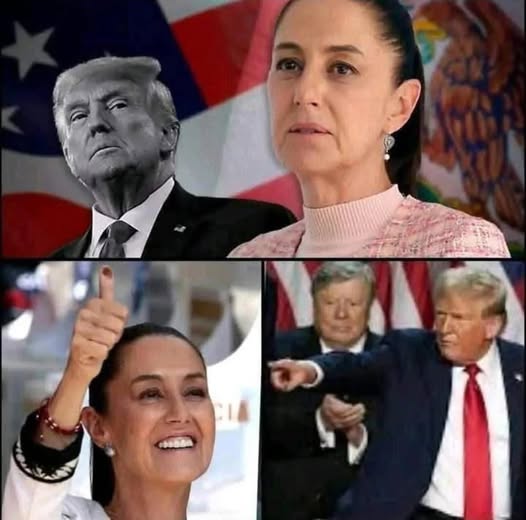
The 2026 decision by Donald Trump to designate Mexico’s most powerful drug cartels as foreign terrorist organizations didn’t just tweak policy—it blew up the old playbook entirely. For decades, U.S.–Mexico cooperation on organized crime relied on a careful balance: intelligence sharing, selective joint operations, and a lot of quiet diplomacy behind closed doors. That model depended on plausible deniability and mutual restraint. Once the “terrorist” label was applied, that ambiguity vanished overnight. What had long been treated as a criminal and public security issue was suddenly reframed as a matter of national security and counterterrorism, unlocking a far more aggressive legal and operational toolkit.
Under U.S. law, the designation carries sweeping consequences. Financial networks tied to cartels can be targeted globally, not just domestically, through asset freezes and sanctions regimes. Individuals—even those far removed from direct violence—risk prosecution for “material support,” a broad category that has historically been used in counterterrorism cases. But beyond the legal framework lies the more controversial shift: operational reach. The quiet introduction of advanced surveillance platforms, including drones capable of persistent monitoring, signaled a willingness to extend U.S. capabilities deeper into Mexican territory than ever before. What had once been unthinkable—cross-border kinetic action justified under counterterrorism doctrine—began to move from hypothetical to plausible.
That’s where figures like Elon Musk entered the conversation in an unexpected way. In his role linked to the conceptual Department of Government Efficiency (DOGE), Musk’s public comments about precision drone strikes against cartel leadership sounded, at first, like typical tech-world provocation. But in the context of shifting doctrine, those remarks landed differently. They hinted at a future where private-sector innovation, AI-driven targeting, and state power converge—blurring lines between military policy and technological experimentation. What might once have been dismissed as speculative rhetoric began to resemble a trial balloon for a more interventionist, tech-enabled approach to transnational threats.
From Mexico’s side, the response was immediate and firm. President Claudia Sheinbaum drew a clear boundary around national sovereignty, emphasizing that cooperation with the United States could not come at the expense of territorial integrity or political independence. Her administration faced a delicate balancing act: acknowledging the real threat posed by cartels while resisting any framework that could justify unilateral foreign intervention. In pushing back, Sheinbaum didn’t just reject the label—she reframed the argument. By targeting U.S. gun manufacturers through legal and diplomatic channels, her government sought to highlight the role American arms play in fueling cartel violence, effectively turning the “terrorism” narrative back toward its source.
This rhetorical and legal counteroffensive underscored a deeper truth: the crisis is not confined within national borders. The flow of weapons south and drugs north has long created a symbiotic, if destructive, relationship between the two countries. By invoking accountability on U.S. soil, Mexico challenged Washington’s attempt to externalize the problem entirely. At the same time, it raised uncomfortable questions about complicity, regulation, and the limits of unilateral action in a deeply interconnected system.
Meanwhile, Washington framed its stance as one of moral clarity and decisive leadership. Against a backdrop of competing global pressures—ranging from renewed scrutiny tied to the Epstein files to escalating tensions in regions like the Middle East—the administration positioned the cartel designation as a necessary assertion of control in an increasingly unstable world. Yet the reality is far more complex. By elevating cartels to the status of terrorist organizations, the U.S. has raised the stakes dramatically, not just legally but militarily and diplomatically.
What now exists is less a coordinated strategy and more a high-tech standoff. Surveillance capabilities, cyber tools, financial enforcement, and the latent possibility of direct action all sit on the table, creating an environment where escalation can happen quickly—and potentially unintentionally. A misinterpreted operation, a cross-border incident, or even a technological error could trigger a chain reaction with consequences far beyond the original intent.
In this new landscape, the line between law enforcement and warfare has blurred almost beyond recognition. Both nations remain publicly committed to cooperation, yet privately wary of overreach. The risk is no longer just cartel violence—it’s the transformation of that violence into a catalyst for broader regional instability. What began as a legal designation now carries the weight of a geopolitical fault line, where strategy, sovereignty, and technology collide in ways that are still unfolding.