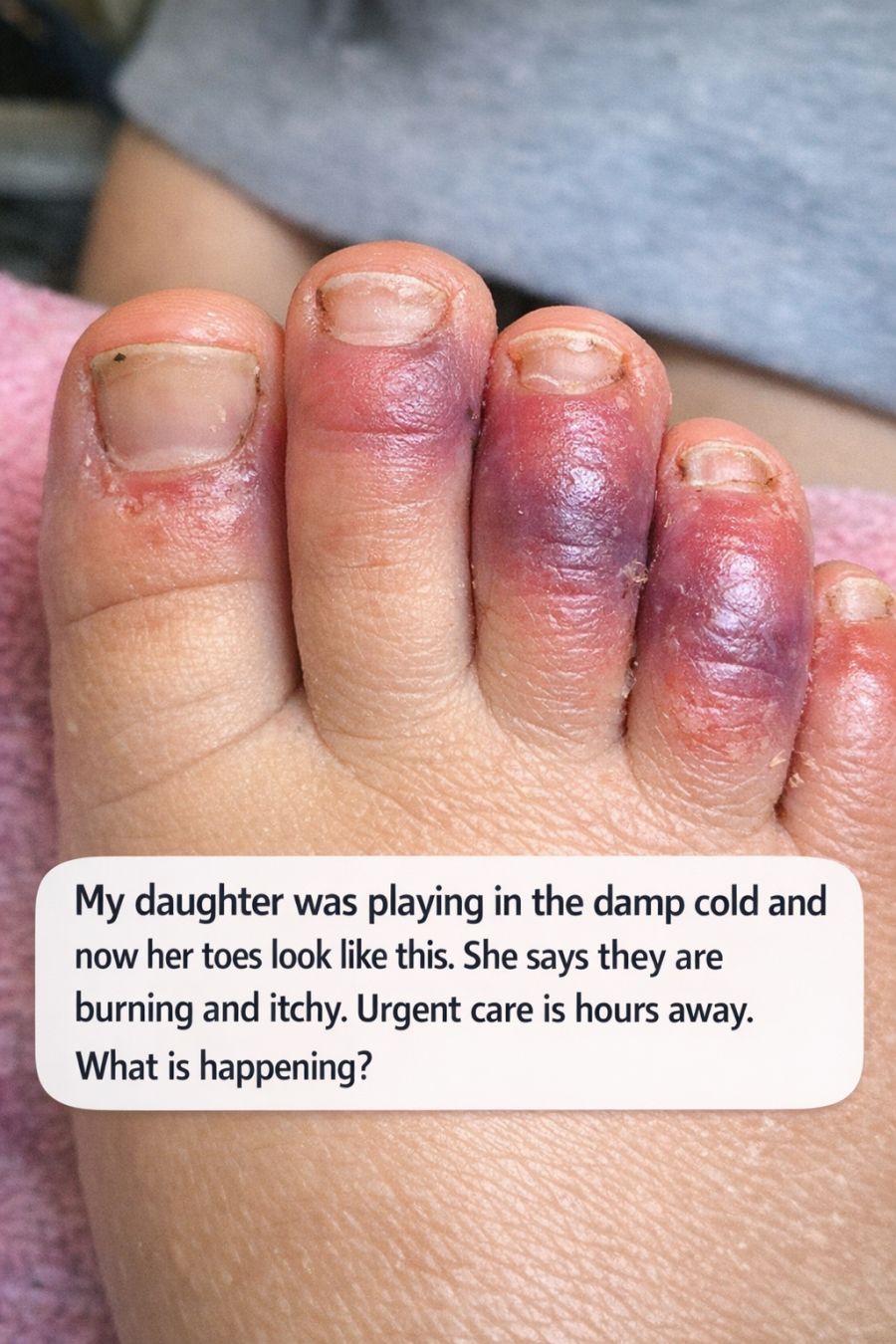
What you’re seeing in these cases is often mistaken for frostbite, but it is more commonly chilblains—a localized inflammatory response of the skin triggered by exposure to cold, damp conditions followed by rapid rewarming. Unlike frostbite, which involves actual freezing of tissue, chilblains develop when the tiny blood vessels near the surface of the skin constrict in the cold and then expand too quickly once warmth is reintroduced. This sudden change can cause the vessels to become inflamed and leaky, leading to the characteristic symptoms.
The affected areas—most often toes, fingers, ears, or the nose—may appear red or purplish, swollen, and feel tender to the touch. Many people also report a burning sensation or persistent itching, which can become quite uncomfortable. These symptoms typically develop within hours of exposure and can last for several days if not managed properly. In more severe cases, the skin may blister or even crack, increasing the risk of infection.
Children and teenagers are particularly susceptible. Their circulatory systems are still maturing, and they are often less attentive to early signs of discomfort, especially when engaged in outdoor play. It’s common for them to stay outside longer than they should, even when their extremities are already cold and damp, which increases the likelihood of developing this condition.
Fortunately, mild cases can usually be managed effectively at home with careful, gradual warming. The key is to avoid sudden temperature changes. Instead of applying direct heat—such as hot water, heating pads, or sitting too close to a heater—it is better to warm the affected area slowly using dry, insulated clothing like soft socks or gloves in a comfortably warm room. Rapid or intense heat can worsen the inflammation and increase discomfort.
Keeping the skin dry is equally important. Damp socks or gloves should be replaced immediately, and layering should be adjusted to maintain warmth without trapping moisture. Encouraging gentle movement—such as wiggling toes or fingers—can also help improve circulation naturally, without putting stress on the affected tissue.
At the same time, it’s essential to monitor symptoms closely. Warning signs such as the development of blisters, increasing pain, spreading redness, or the presence of discharge (pus) may indicate complications that require prompt medical attention. In such cases, a healthcare professional can assess the condition, rule out more serious issues like frostbite, Raynaud’s phenomenon, or infection, and recommend appropriate treatment. This may include medicated creams to reduce inflammation or, in some instances, medications that improve blood flow.
With proper care and prevention, chilblains typically resolve completely without long-term effects. The most effective approach is proactive: ensuring children wear appropriate winter gear, take regular breaks to warm up, and avoid prolonged exposure to cold, damp environments. By combining awareness with simple protective measures, most cases can be avoided altogether—allowing children to continue enjoying outdoor winter activities safely and comfortably.