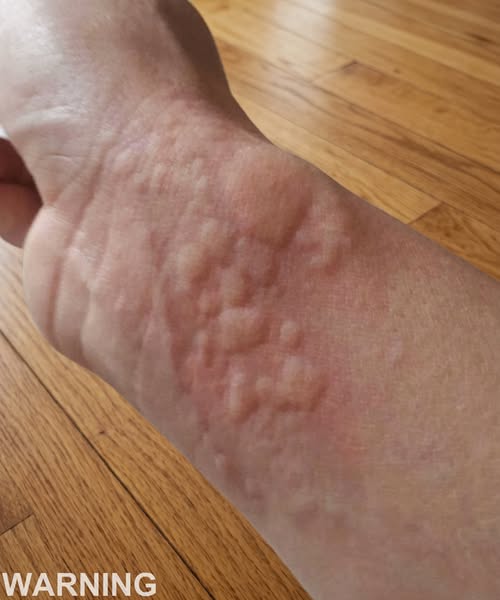
At first, a cluster of raised, itchy welts may seem like nothing more than an uncomfortable irritation.
Many people dismiss hives as a minor allergic reaction—annoying, unpleasant, but ultimately harmless. If you have experienced mild allergies before, it can be tempting to assume the rash will fade on its own with little more than time or an antihistamine.
But the body sometimes sends warnings that should never be ignored.
When hives appear alongside symptoms such as wheezing, chest tightness, difficulty breathing, or swelling involving the lips, tongue, or throat, the situation may be far more serious than a simple skin reaction. In these moments, the body may be experiencing anaphylaxis—a severe, rapidly developing allergic emergency capable of becoming life-threatening within minutes.
Unlike ordinary allergic discomfort, anaphylaxis affects the entire body.
The immune system reacts aggressively to a trigger—commonly certain foods, medications, insect stings, or environmental allergens—releasing chemicals that cause widespread inflammation and disruption. Blood vessels may suddenly widen, causing blood pressure to fall dangerously low. Airways can swell and tighten, making breathing increasingly difficult. What begins as itching or a rash can quickly progress into dizziness, collapse, or loss of consciousness if treatment is delayed.
That is why recognizing the combination of symptoms matters so deeply.
A rash alone may not signal emergency.
But a rash combined with breathing difficulty changes everything.
Many people mistakenly wait, hoping symptoms will settle or assuming they are overreacting. Unfortunately, hesitation can become the most dangerous part of the situation. Anaphylaxis does not always progress slowly or predictably. In some cases, symptoms worsen with alarming speed, leaving little time to respond.
When breathing becomes involved, immediate action is essential.
Emergency medical services should be contacted without delay. If an epinephrine auto-injector is available, it should be used promptly according to medical guidance. Epinephrine works by helping relax airway muscles, supporting blood pressure, and slowing the allergic response while emergency care is arranged.
Equally important is understanding that early improvement does not mean the danger has passed.
Some people experience what medical professionals call a secondary or biphasic reaction, where symptoms return after initially appearing to improve. Because of this risk, medical evaluation remains necessary even if the person begins feeling better following treatment.
Not every rash represents a crisis.
Most skin irritations, allergies, and hives remain manageable and non-life-threatening.
But the body draws an important line when breathing, swelling, or circulation become involved.
That line deserves respect.
Recognizing the difference between mild discomfort and a medical emergency is not an act of fear or overreaction. It is an act of awareness and protection—one capable of preserving health and, in some cases, saving a life.
The message is simple but critical:
If hives appear together with shortness of breath, chest tightness, or swelling of the face and throat, do not dismiss it, delay action, or gamble on symptoms fading away.
Because when the body sounds its loudest alarm, listening quickly can make all the difference.