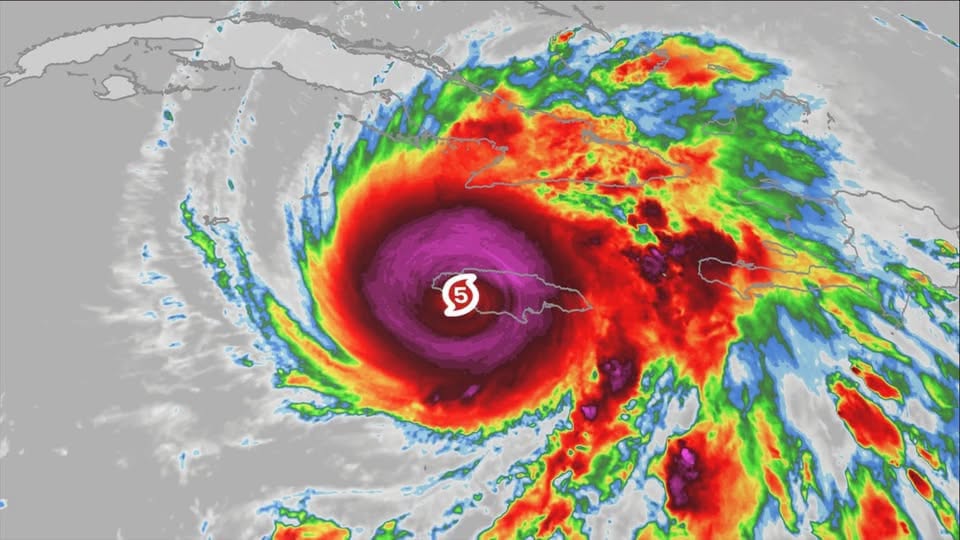
Jamaica faced an unprecedented natural disaster on October 28, 2025, when Hurricane Melissa made landfall near the community of New Hope along the island’s southwest coast. Arriving as a Category 5 hurricane, the storm unleashed devastating conditions and immediately became one of the most powerful hurricanes ever recorded to strike land in the Atlantic basin.
Meteorologists reported sustained winds of approximately 185 mph (298 km/h) at landfall, accompanied by a minimum central pressure of 892 millibars. These extraordinary measurements placed Hurricane Melissa among the most intense tropical cyclones in recorded Atlantic history, matching the wind speeds of Hurricane Dorian in 2019 and the infamous Labor Day Hurricane of 1935. Its exceptionally low pressure also equaled that of the 1935 storm, a benchmark long associated with some of the most extreme hurricane conditions ever observed.
As Melissa approached Jamaica, weather experts warned that the hurricane was capable of causing widespread destruction across large portions of the island. Residents in vulnerable coastal areas were urged to evacuate as emergency officials prepared for life-threatening conditions. However, the storm’s rapid intensification left many communities with limited time to complete preparations before its arrival.
The hurricane brought a combination of catastrophic hazards, including violent winds capable of destroying homes and infrastructure, torrential rainfall that threatened severe flooding and landslides, and a dangerous storm surge that pushed seawater inland along vulnerable coastal regions. Power outages, communication disruptions, and transportation challenges were expected to affect large areas as emergency crews worked to respond to the disaster.
Experts noted that Hurricane Melissa highlighted a growing concern among meteorologists: the increasing tendency of some tropical cyclones to intensify rapidly shortly before making landfall. Such rapid strengthening can significantly reduce the time available for evacuations and emergency planning, increasing the risks faced by affected communities.
For Jamaica, the storm represented one of the most serious weather emergencies in modern history. Authorities continued to assess the full extent of the damage while rescue and recovery efforts were launched across impacted regions. The long-term effects on infrastructure, agriculture, local businesses, and thousands of residents were expected to become clearer in the days and weeks following the hurricane.
As the nation began responding to the aftermath, Hurricane Melissa was already being discussed by weather historians and climate experts as one of the most significant Atlantic hurricane events ever recorded, underscoring the immense power that tropical cyclones can unleash when they reach their highest intensity.