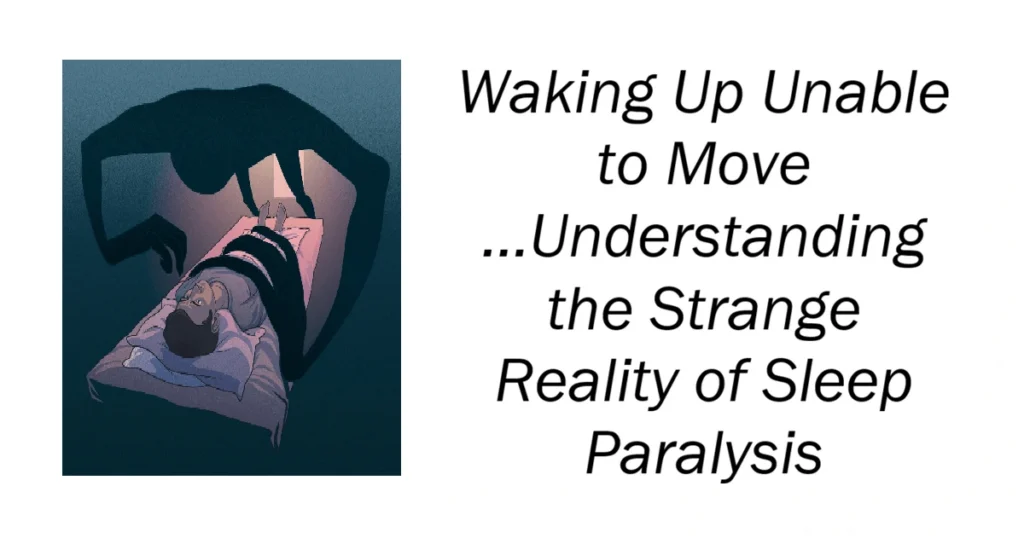
Waking Up Unable to Move …Understanding the Strange Reality of Sleep Paralysis
Imagine waking up in the middle of the night, fully aware of your surroundings—but unable to move a single muscle.
Your eyes are open.
Your mind is awake.
Yet your body refuses to respond.
For many people, this unsettling experience feels like something straight out of a nightmare. Some report sensing a presence in the room, hearing strange sounds, or seeing shadowy figures lurking nearby.
This phenomenon is known as sleep paralysis, and while it can be frightening, it’s far more common—and far less dangerous—than many people realize.
What Is Sleep Paralysis?
Sleep paralysis occurs when your brain wakes up before your body has fully transitioned out of sleep.
During an episode, you may be conscious and aware of your surroundings but temporarily unable to move, speak, or react.
The experience typically lasts anywhere from a few seconds to a few minutes before normal movement returns.
Although it can feel alarming, sleep paralysis is generally considered harmless.
Why Does It Happen?
To understand sleep paralysis, it helps to know what happens during sleep.
During the rapid eye movement (REM) stage, the phase when most dreaming occurs, the brain temporarily relaxes and inhibits most voluntary muscles. This natural process prevents us from physically acting out our dreams while we sleep.
Sleep paralysis happens when there’s a brief mismatch between the brain and the body.
Essentially:
- Your mind wakes up.
- Your body remains in REM-related muscle inhibition.
- You become aware before full control of your muscles returns.
As a result, you may feel trapped in your own body for a short period of time.
Why Do Some People See or Hear Things?
One of the most fascinating—and frightening—aspects of sleep paralysis is the possibility of hallucinations.
Some people report:
- Seeing shadowy figures
- Hearing whispers, footsteps, or voices
- Feeling pressure on their chest
- Sensing someone else in the room
These experiences occur because parts of the brain associated with dreaming may still be active while you’re becoming conscious.
In other words, elements of a dream can briefly overlap with waking awareness, creating vivid and realistic sensations.
While these experiences can feel incredibly real, they are not signs of supernatural activity or mental illness.
Common Triggers of Sleep Paralysis
Several factors can increase the likelihood of experiencing sleep paralysis:
1. Sleep Deprivation
Not getting enough sleep is one of the most common triggers.
2. Irregular Sleep Schedules
Frequent changes to bedtime and wake-up times can disrupt normal sleep cycles.
3. Stress and Anxiety
Periods of emotional stress often increase the likelihood of sleep disturbances, including sleep paralysis.
4. Extreme Fatigue
Physical and mental exhaustion can affect the brain’s sleep-wake transitions.
5. Sleeping Position
Some studies suggest that sleep paralysis may occur more frequently when sleeping on the back.
How to Reduce Your Risk
The good news is that simple lifestyle adjustments can often help reduce episodes.
Maintain a Consistent Sleep Schedule
Try to go to bed and wake up at roughly the same time every day, including weekends.
Create a Relaxing Bedtime Routine
Calming activities before bed can help prepare your mind and body for restful sleep.
Consider:
- Reading a book
- Taking a warm bath
- Listening to soothing music
- Drinking a caffeine-free herbal tea
Limit Screen Time Before Bed
The blue light emitted by phones, tablets, and computers can interfere with melatonin production, making it harder to fall asleep.
Aim to reduce screen exposure at least one hour before bedtime.
Manage Stress
Relaxation techniques may help improve sleep quality and reduce disruptions.
Options include:
- Deep breathing exercises
- Meditation
- Yoga
- Journaling
Optimize Your Sleep Environment
A comfortable sleeping space can make a significant difference.
Focus on:
- A cool, quiet bedroom
- Comfortable bedding
- Minimal light and noise distractions
What to Do During an Episode
If sleep paralysis occurs, understanding what’s happening can help reduce fear.
Try to remember:
- The episode is temporary.
- Your breathing remains normal, even if it feels unusual.
- The paralysis will pass on its own.
Many people find it helpful to focus on slow, steady breathing while attempting small movements such as:
- Wiggling a finger
- Moving a toe
- Blinking deliberately
These small actions often help restore full movement more quickly.
When Should You See a Doctor?
Occasional sleep paralysis is usually not a cause for concern.
However, consider speaking with a healthcare professional if:
- Episodes occur frequently
- They significantly disrupt your sleep
- You experience excessive daytime sleepiness
- Symptoms may be related to another sleep disorder
A doctor or sleep specialist can help determine whether further evaluation is needed.
Final Thoughts
Sleep paralysis is one of the strangest experiences the human brain can produce. Waking up unable to move, sometimes accompanied by vivid hallucinations, can feel frightening and deeply unsettling.
Yet despite how dramatic it may seem, sleep paralysis is typically a harmless sleep phenomenon caused by a temporary disconnect between the brain and body during the transition between sleep and wakefulness.
Understanding what is happening—and taking steps to improve sleep quality—can make these episodes less intimidating and, in many cases, less frequent.
The next time it happens, remember: your body is simply finishing a process that your mind has already awakened from.