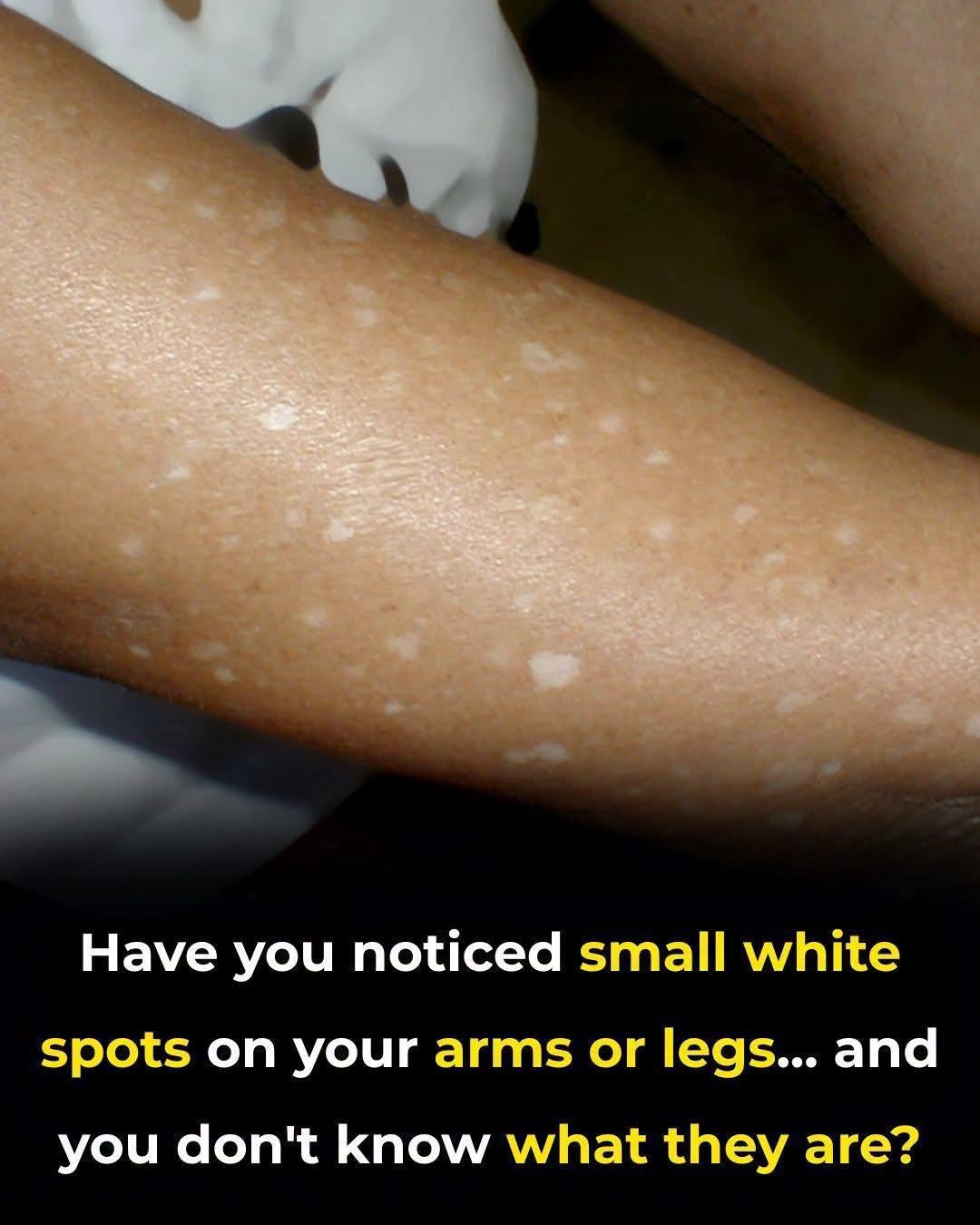
As the warm, sun-drenched days of summer finally fade and your deep tan begins to wash away, you might suddenly notice small, pale, ghost-like dots scattered across your arms and legs. Standing out starkly against the slightly darker surrounding skin, these tiny white marks can be deeply unsettling. For many people, watching them multiply with age triggers instant panic, leading to terrifying fears about hidden illnesses, spreading infections, or permanent skin damage. Before you spiral into anxiety or waste money on aggressive, unproven treatments, you need to know the surprising medical truth behind these mysterious spots.
For decades, millions of people have panicked upon discovering these pale patches, often assuming they are the early warning signs of a serious, degenerative medical condition or an aggressive spreading fungus. However, medical experts reassure us that these common blemishes are scientifically known as idiopathic guttate hypomelanosis—or IGH for short. Despite the intimidating, complex medical terminology, the condition itself is entirely harmless, non-contagious, and remarkably common.
IGH manifests as small, flat, smooth white patches of skin that develop due to a localized reduction or total loss of melanin, which is the natural pigment responsible for giving your skin its rich color. These stubborn little spots usually measure just a few millimeters across and can appear on individuals of all skin tones, ethnicities, and backgrounds. Most frequently, they crop up on parts of the body that bear the brunt of everyday environmental exposure—most notably the arms, legs, and sometimes the face.
Medical statistics reveal a striking reality: between 50% and 80% of all adults over the age of forty will develop at least a few of these pale spots. Rather than signaling an internal health crisis or a dangerous pathology, dermatologists classify IGH as a completely natural, benign part of the skin’s normal aging process.
So, what triggers this sudden loss of pigment? The primary culprit behind IGH is cumulative, long-term sun exposure. Over the course of years and decades, invisible ultraviolet (UV radiation) slowly damages the delicate melanocyte cells residing in your skin—the specialized factories responsible for manufacturing melanin. When these hardworking cells eventually weaken, shut down, or disappear entirely in small, isolated patches of skin, those specific areas lose their ability to tan, remaining pale and white compared to the healthy surrounding tissue.
In short, every single hour spent soaking up unprotected sunshine quietly chips away at your skin’s pigment-producing cells, leaving visible reminders scattered across your limbs. While this realization might make you wish you had worn more sunscreen in your youth, the comforting news remains: these spots pose zero threat to your physical health and never indicate a severe underlying disease.
Naturally, once people notice these persistent white marks, their immediate instinct is to find a way to scrub, burn, or treat them away. Unfortunately, modern dermatology confirms that there is currently no medically proven cure or permanent treatment capable of fully eliminating IGH.
Scouring the internet will introduce you to a wide array of supposed remedies, including topical retinoids, aggressive chemical peels, and advanced laser or light-based therapies. However, skin experts caution that these expensive interventions are highly unlikely to restore lost pigment once the underlying melanocyte cells have completely vanished. Results from such treatments are usually inconsistent, fleeting, or entirely nonexistent, which is precisely why professional dermatologists rarely recommend invasive procedures solely for IGH.
Adding to the confusion, many people mistakenly confuse these harmless sun spots with common fungal skin infections, such as tinea versicolor. Driven by misdiagnosis, individuals frequently waste time and money scrubbing their bodies with harsh antifungal shampoos or medicated creams, only to find the white spots completely unchanged.
Distinguishing between the two conditions is actually quite straightforward. IGH spots typically present as flat, smooth, and dry patches located primarily on the legs and arms. In stark contrast, fungal skin patches usually target the chest, back, or shoulders, and they frequently feature a scaly texture accompanied by intense itching. If your pale spots begin spreading at an alarming rate, become itchy, or undergo sudden structural changes, it is always wise to consult a qualified physician to rule out other dermatological issues.
While IGH cannot be permanently cured, you are far from helpless if the spots bother you from a cosmetic standpoint. Simple, non-invasive strategies can easily minimize their appearance. You can use lightweight body makeup or a gradual self-tanner to smoothly blend your skin tone. More importantly, applying broad-spectrum sunscreen daily will protect your skin from accumulating further damage and prevent new spots from forming. Keeping your skin deeply moisturized also enhances its overall texture and resilience.
Ultimately, the most important takeaway is to shift your perspective. These pale spots are completely normal, entirely harmless, and an extremely common byproduct of living life under the sun. They do not mean your skin is unhealthy, damaged beyond repair, or diseased; they are simply a visible map of time, memories, and sun-kissed summers gone by.