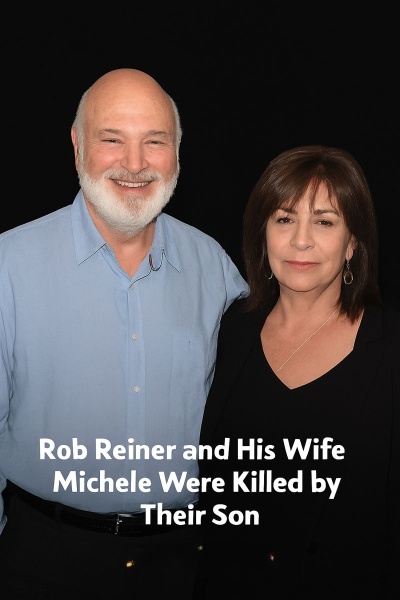
Rob Reiner has spent a lifetime telling stories about love, loyalty, moral conflict, and the fragile, often funny ways people fall apart and find their way back. Few filmmakers have shaped American popular culture as consistently or as thoughtfully as he has. From his breakout role on All in the Family to directing landmark films like When Harry Met Sally, A Few Good Men, Stand by Me, and The Princess Bride, Reiner helped define how multiple generations understand friendship, romance, justice, and conscience on screen.
His work sits at the intersection of mainstream success and emotional intelligence. These are not hollow blockbusters or disposable hits. They are cultural touchstones, endlessly rewatched, quoted, and analyzed. In the landscape of classic Hollywood cinema and modern American filmmaking, Reiner’s name carries weight not because of spectacle, but because of substance. He told stories that trusted audiences to feel deeply and think clearly at the same time.
Off screen, Rob Reiner’s life followed a quieter, steadier rhythm. He and his wife, Michele Singer Reiner, built a long marriage grounded in partnership rather than performance. In an industry notorious for volatility, their relationship stood out for its durability and discretion. They raised children largely away from the spotlight, focusing on family even as Reiner’s professional influence continued to grow.
Like many families, theirs was not immune to hardship. Their son Nick’s struggles with addiction became part of a difficult chapter that tested every bond in the household. Addiction is ruthless in the way it strips people of certainty and control, and for parents, it introduces a specific kind of fear that never fully rests. Nick’s descent included periods of homelessness, loss, and deep instability. It also included something less frequently discussed: the relentless effort of a family refusing to give up.
Recovery did not arrive cleanly or quickly. It came through setbacks, humility, and time. Nick eventually rebuilt his life, finding stability and purpose through writing and creative work of his own. His journey became a reminder that survival is not linear and that love does not guarantee safety, but it can still provide a lifeline. For Rob and Michele, that chapter reshaped their understanding of resilience far more personally than any script ever could.
In recent days, an unsettling narrative has circulated online, one that starkly contrasts with the lives and legacies people associate with this family. Headlines and speculation have created a chilling hypothetical: a once-private household transformed into a site of unanswered questions, grief, and shock. Authorities have not confirmed such events, and responsible reporting remains essential, especially when real people and real reputations are involved.
What this moment reveals is not a confirmed tragedy, but something equally unsettling about modern media culture. In the age of viral celebrity news, rumor can move faster than fact. Stories about famous families, particularly those associated with Hollywood royalty, can quickly slip from reflection into sensationalism. The line between storytelling and exploitation becomes dangerously thin.
Yet even imagining such an ending forces a reckoning with what truly defines a life.
Rob Reiner’s legacy is not a single chapter or a final headline. It is decades of storytelling that explored human dignity, moral courage, and emotional truth. It is a body of work that shaped American film history and continues to influence directors, writers, and actors across generations. It is advocacy, political engagement, and a willingness to speak publicly about values, even when doing so invited criticism.
Michele Reiner’s legacy is equally significant, though less public-facing. She helped build a family structure that endured stress, fame, and pain without collapsing inward. She remained a constant presence, not as a public figure, but as a stabilizing force. That kind of contribution rarely trends or earns awards, yet it is foundational to every visible success around it.
And Nick’s story, still unfolding, resists simple conclusions. It sits at the intersection of inherited privilege and brutal vulnerability. His survival and recovery complicate any attempt to flatten the family narrative into heroes or villains. Human lives, unlike movies, do not resolve cleanly.
What remains undeniable is this: the Reiner family represents the full spectrum of American life behind the Hollywood curtain. Creativity and chaos. Achievement and addiction. Stability and strain. Love that persists even when certainty disappears.
In a media environment driven by high-engagement headlines, search traffic, and emotional extremes, it is tempting to reduce people to moments of shock. But legacies are not built—or erased—by a single rumor, investigation, or imagined ending. They are built over years of choices, failures, repairs, and enduring commitment.
Rob Reiner spent his career reminding audiences that people are rarely just one thing. That lesson applies here as well. Whatever narratives circulate, whatever speculation rises and falls, the deeper story is one of complexity rather than collapse.
Art outlives headlines. Love outlives rumor. And a life, honestly lived, cannot be undone by even the darkest imagined conclusion.