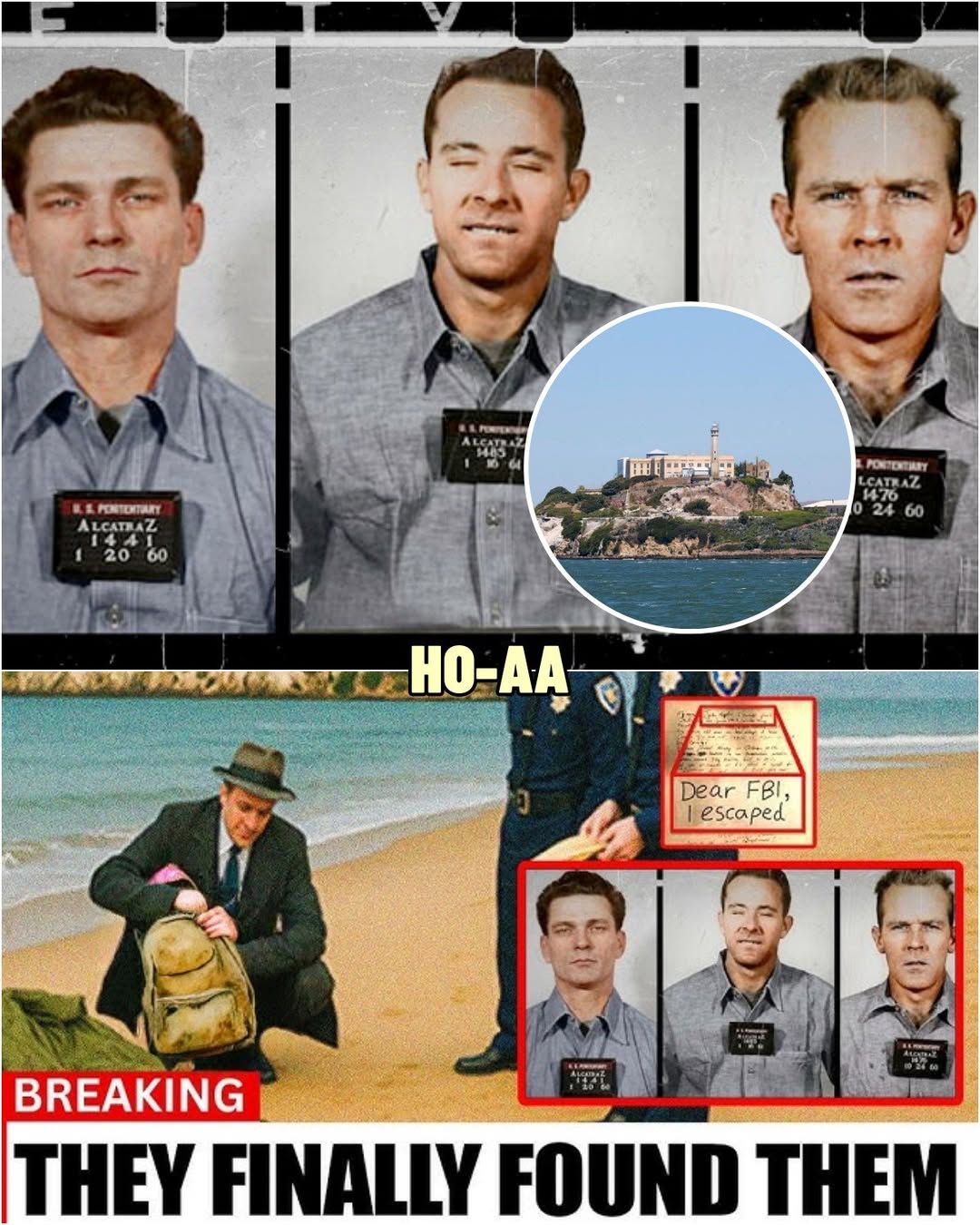
The Night Alcatraz May Have Failed
The night was black, cold, and silent—perfect conditions for a desperate gamble. Three men, hardened by years behind bars, slipped out of the shadows of America’s most feared prison and into history. What followed would become the most notorious escape attempt the world has ever known. For decades, the fate of Frank Morris and brothers John and Clarence Anglin remained a mystery that haunted law enforcement, fascinated conspiracy theorists, and inspired countless books and films.
Now, more than half a century later, newly uncovered evidence suggests that the story may not have ended the way authorities once claimed. The legend of Alcatraz—the prison said to be unbreakable—may never be the same again.
The Myth of the Rock That Couldn’t Be Broken
Alcatraz was built to crush hope. Perched on a windswept island in the middle of San Francisco Bay, it was designed to hold the most dangerous and cunning criminals in America. Its cold concrete cells once confined infamous figures such as Al Capone and George “Machine Gun” Kelly. Guards openly bragged that escape was impossible.
The prison’s reputation rested on more than walls and bars. The surrounding waters were icy year-round, the currents unpredictable and powerful. Officials insisted that anyone attempting to swim away would succumb to hypothermia or be dragged out to sea. Alcatraz wasn’t just a prison—it was meant to be the end of the road.
Between 1934 and 1963, 36 inmates attempted escape in 14 separate incidents. Most were caught. Some were shot. Others were presumed drowned. These failures only reinforced the myth: Alcatraz could not be beaten.
Three Men and a Plan Built on Patience
Frank Morris was different. Highly intelligent, disciplined, and methodical, he believed the prison’s greatest weakness wasn’t its location—but human complacency. Alongside the Anglin brothers, he spent months quietly preparing.
Using nothing more than stolen spoons, discarded materials, and relentless patience, the men widened ventilation ducts behind their cells. They constructed a makeshift raft from raincoats, stitched together with heat and ingenuity. To buy time, they sculpted realistic dummy heads from soap, toothpaste, and toilet paper, carefully painting hair stolen from the barbershop.
On the night of June 11, 1962, the plan went into motion. While guards completed routine checks, three lifeless-looking heads rested in beds. By the time the deception was discovered, Morris and the Anglins were already gone—vanished into the darkness of the bay.
Official Verdict: Drowned and Forgotten
The FBI investigated for 17 years. In 1979, it officially concluded that the men likely drowned, citing cold water temperatures and the lack of confirmed sightings. Case closed. The Rock stood undefeated.
But not everyone accepted that answer.
Evidence That Refuses to Stay Buried
Over the years, troubling details emerged. A raft fragment washed ashore months later. Family members reported receiving strange postcards. The Anglin family claimed the brothers had been seen in Brazil years after the escape. In 2013, a letter surfaced—allegedly written by Frank Morris himself—claiming he survived the swim and lived under an assumed identity.
Even the FBI quietly admitted that no bodies were ever found.
In 2018, U.S. Marshals reopened the case, citing new forensic analysis, ocean current simulations, and photographic evidence suggesting the escape may have been survivable after all—especially for strong swimmers like the Anglin brothers, who grew up swimming in icy rivers.
A Prison’s Reputation Rewritten
If Morris and the Anglins lived, then Alcatraz’s greatest power—its reputation—was built on a lie. The prison wasn’t escape-proof. It was simply never proven otherwise.
Today, Alcatraz stands as a museum, visited by millions each year. Tour guides still tell the official story. But behind the exhibits and audio tours lies an uncomfortable truth: three men may have beaten the system, and history chose certainty over doubt.
Whether they died in the water or lived quiet lives elsewhere, one thing is undeniable—the escape of Frank Morris and the Anglin brothers remains the most audacious challenge ever mounted against America’s toughest prison.
And the mystery, even now, refuses to stay locked away.