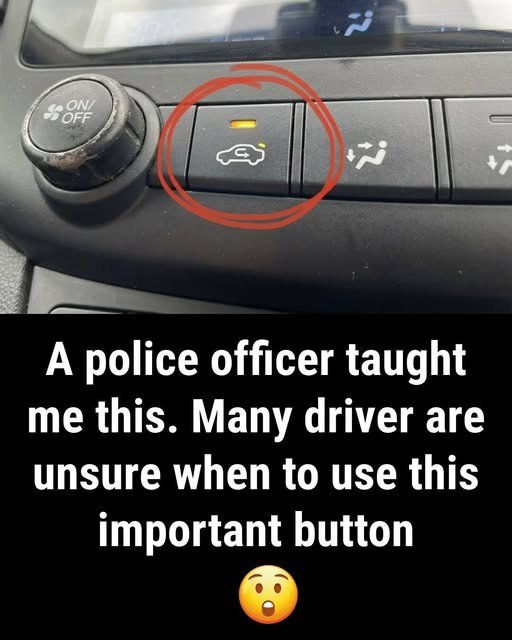
That small button with the circular arrow icon on your dashboard is your car’s air recirculation control, and understanding how to use it properly can make a significant difference in comfort, air quality, and even driver alertness.
When air recirculation is activated, your vehicle stops drawing air from outside and instead continuously reuses the air already inside the cabin. This function is especially effective in hot weather. Because the air conditioner is cooling air that has already been partially cooled, the cabin temperature drops faster and more efficiently. The system doesn’t have to fight extreme outdoor heat, which can also reduce strain on the AC and improve fuel efficiency slightly during summer driving.
Recirculation is also valuable in specific driving environments. In heavy traffic, tunnels, urban congestion, or when driving behind diesel trucks or vehicles emitting smoke, it acts as a protective barrier. By blocking outside air, it helps keep exhaust fumes, pollution, dust, and unpleasant odors from entering the cabin. For drivers with allergies or respiratory sensitivities, using recirculation alongside a clean cabin air filter can noticeably reduce pollen exposure, sneezing, and eye irritation.
However, this feature is not designed for constant use. When air is recirculated for long periods, humidity inside the cabin can build up, especially if passengers are breathing heavily or the weather is damp. Over time, the air may begin to feel stale, oxygen levels can drop slightly, and windows may fog more easily. Prolonged use can also contribute to drowsiness on long drives, as fresh oxygen intake is reduced.
That’s why recirculation should be used intentionally, not automatically. In rainy or cold conditions, switching back to fresh air helps prevent window fogging. On long trips, especially at highway speeds, allowing outside air in keeps the cabin feeling fresher and helps maintain alertness. If there are lingering odors inside the car—from food, pets, or moisture—fresh air mode is the fastest way to clear them out.
Many modern vehicles automatically toggle recirculation on and off based on conditions, but manual control still matters. Knowing when to use it—and when to turn it off—can improve comfort, visibility, and overall driving safety.
Used correctly, that single circular-arrow button is more than a convenience feature. It’s a tool for managing heat, pollution, allergies, and driver fatigue. With a little awareness, it can make every drive cleaner, cooler, and far more comfortable.