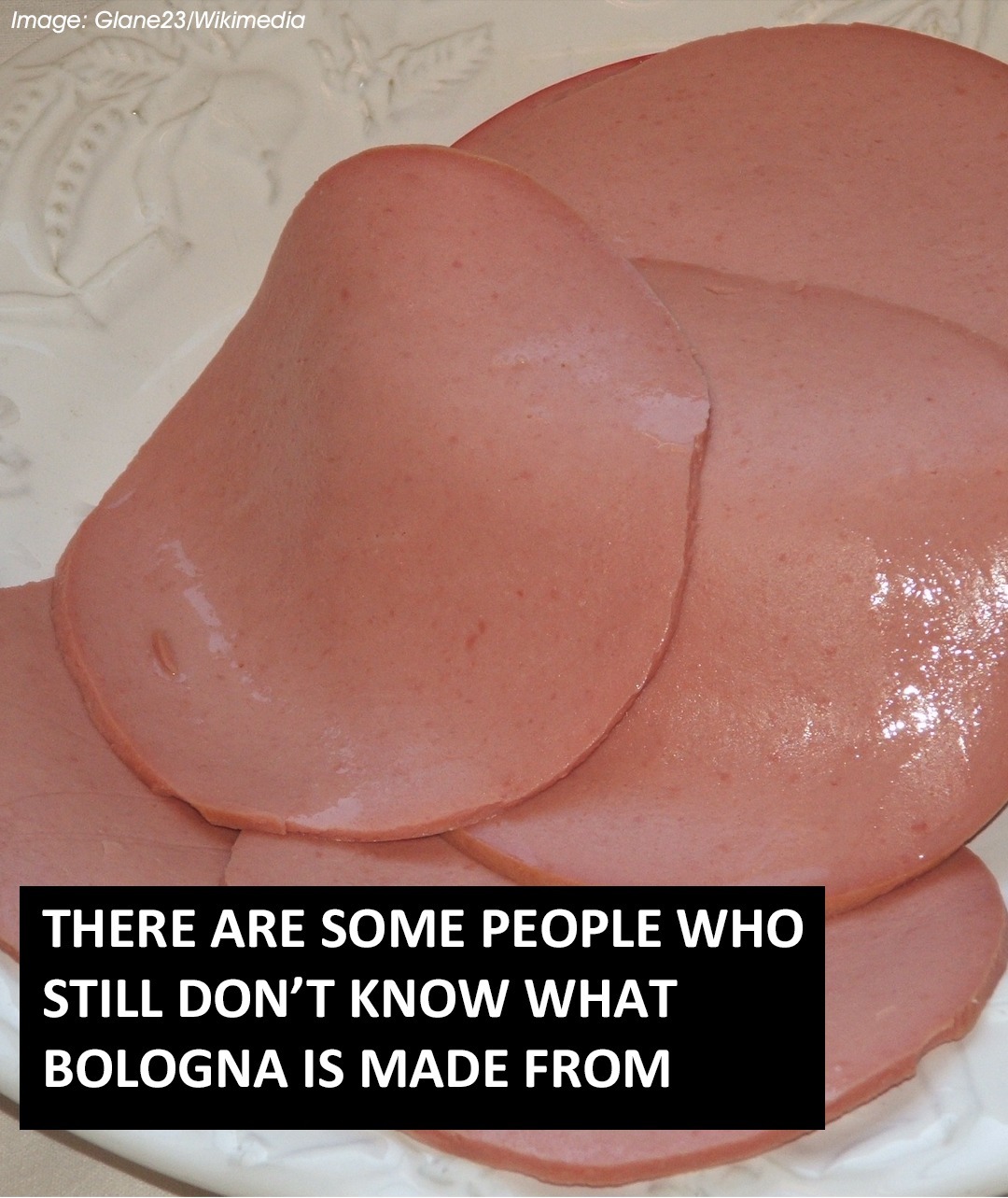
Bologna isn’t some random “mystery meat.” It’s actually a tightly regulated, modern descendant of traditional sausage-making that goes back centuries. Today’s bologna is typically made from beef, pork, chicken, or a blend of these meats. The meat is finely ground and emulsified into the smooth paste people recognize, then cooked and often lightly smoked inside natural or synthetic casings. Despite the jokes about beaks, hooves, and other horror stories, strict U.S. food regulations and modern market standards mean most mass-produced bologna uses normal cuts of meat and fat, not the nightmare leftovers people imagine.
Its Italian relative, Mortadella, reveals where the idea originally came from. This famous sausage from Bologna has been produced for centuries and is known for its rich flavor, visible cubes of fat, black peppercorns, and sometimes pistachios. It’s thicker, more aromatic, and considered a delicacy in many parts of Europe.
American-style Bologna sausage, however, evolved into something more standardized. It’s smoother, more uniform, and designed for consistency and affordability. If you check the label, the ingredients are straightforward: meat, fat, spices, curing agents, and sometimes sweeteners. It’s definitely processed and not exactly a health food, but it isn’t a mysterious monster either—just a simple, mass-produced comfort food that people love to joke about while still putting it in sandwiches.