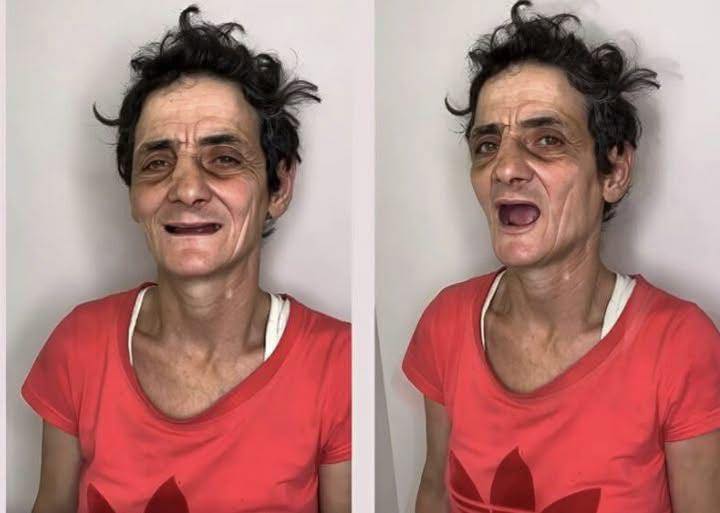
Rita’s life had unraveled slowly, shaped by loss, isolation, and the quiet erosion of hope. After losing her only son, the emotional weight became too heavy to carry within the structure of her previous life. What followed was a descent into homelessness—years spent surviving day to day, collecting bottles and scraps simply to get by. Each morning was uncertain, each night defined by the same question of where she might find shelter.
Over time, the physical hardships were compounded by something less visible but equally damaging: isolation. Without a support system, and surrounded by the often harsh judgments of others, Rita found herself pushed further to the margins of society. People passed by without seeing her, or worse, saw only her circumstances and not the person behind them. Her appearance, shaped by years without access to basic care, became another barrier—reinforcing the distance between her and the world she once belonged to.
The turning point in her story came when she crossed paths with Shafag Novruz, a makeup artist known for her work with marginalized women. Unlike many others, Shafag did not see Rita as a reflection of failure or misfortune. Instead, she recognized something deeper—resilience, strength, and a person who had endured more than most.
Rather than beginning with surface-level changes, Shafag focused on something fundamental: restoring Rita’s sense of self. She arranged for dental care, addressing long-neglected issues and giving Rita back something profoundly important—her smile. This was more than a physical improvement; it was a step toward rebuilding confidence, dignity, and the ability to engage with others without shame or hesitation.
From there, the transformation continued. Rita received a full makeover that included hair care, nail treatment, and thoughtful styling. Each step was approached with care and intention, not as an attempt to create a new identity, but to reveal the one that had been hidden beneath years of hardship. The process was not about appearance in a superficial sense—it was about recognition, about affirming that she was worthy of time, effort, and respect.
When Rita finally saw herself after the transformation, her reaction was immediate and deeply emotional. Tears mixed with laughter as she confronted a reflection she had not seen in years. It was not just about how she looked—it was about reconnecting with who she was. For a moment, the weight of the past seemed to lift, replaced by something she had nearly lost: a sense of possibility.
Her story serves as a powerful reminder of the impact that compassion and attention can have. It illustrates that meaningful change does not always require large-scale intervention; sometimes, it begins with a single act of care, a decision to see someone fully and respond with humanity.
Rita’s journey is not just about transformation—it is about restoration. It shows that even after years of neglect and invisibility, it is possible to rebuild confidence, reclaim dignity, and reopen the door to hope.