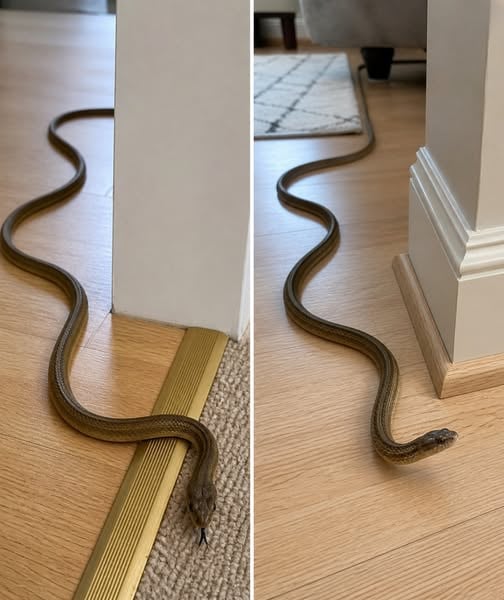
The snake on your floor isn’t a scene from a horror movie.
It isn’t hunting you.
It isn’t plotting an attack.
More often than not, it is simply hungry, frightened, and following a trail you never noticed.
Snakes can slip into homes through openings so small they seem impossible — tiny cracks in foundations, gaps beneath doors, damaged vents, unscreened windows, or hidden spaces around pipes and walls. They are drawn by opportunity: warmth, shelter, and most importantly, food. Rats, mice, insects, and other small prey can unknowingly lead them straight into the places where we live.
Then comes the moment nobody expects.
You step into a room and freeze.
Something moves across the floor.
Panic takes over instantly. Children scream. A dog barks and lunges. Hearts race. Fear spreads through the house in seconds, and suddenly every decision feels urgent.
But this is where people often make the situation worse.
The real danger is not always the snake itself — it is panic, confusion, and one rushed reaction.
Many people instinctively try to corner the animal, strike it, or grab tools to remove it themselves. Others attempt to chase it out without understanding what species they are dealing with. These actions can escalate the encounter quickly. Even snakes that are not venomous may bite when they feel trapped or threatened, and misidentifying a venomous species can have serious consequences.
The safest response is surprisingly simple.
Stay calm.
Keep children and pets away from the area. Close doors if possible to contain the snake to one room, and maintain a safe distance. Avoid touching, provoking, or attempting to capture it yourself. In most cases, the animal is looking for a way out, not a confrontation.
Professional help is often the smartest solution. Animal control officers, wildlife rescue teams, or licensed pest professionals have the experience and equipment needed to remove snakes safely and humanely, protecting both your family and the animal.
Once the snake is removed, the bigger question remains:
How did it get inside in the first place?
Prevention matters. Seal cracks and openings around the home. Install door sweeps and proper window screens. Reduce clutter where rodents may hide, and address insect or pest problems that attract predators. A snake indoors is often a warning sign that prey animals have already made themselves comfortable nearby.
While the sight of a snake inside your home can be terrifying, it helps to remember an important truth: snakes are not villains. In nature, they serve a critical role by controlling rodent populations and maintaining balance in the ecosystem.
Inside your home, however, the goal is simple — calm distance, smart action, and professional help.
Fear may be natural, but knowledge turns a frightening surprise into a manageable, one-time scare.