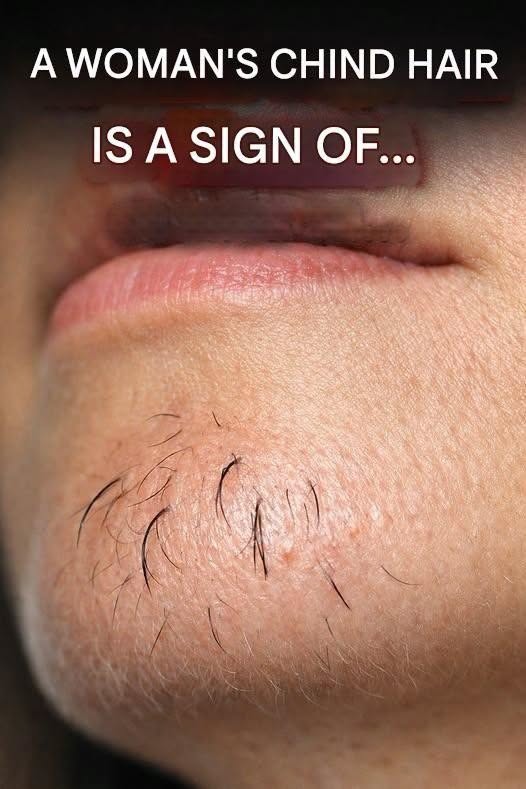
Finding a few chin hairs is something many women experience, yet it often remains a topic surrounded by confusion, embarrassment, or unnecessary concern. A single coarse hair or gradual increase in facial hair may feel sudden or unexpected, leading some to immediately fear that something is seriously wrong. In reality, facial hair growth in women is far more common than many realize and is often connected to natural hormonal activity rather than a dangerous medical condition.
The human body is constantly influenced by a delicate balance of hormones, genetics, age, and environmental factors. These systems work together in complex ways, affecting everything from metabolism and mood to skin texture and hair growth patterns. Because every person’s hormonal profile is unique, the way hair grows on the body and face can vary widely between individuals.
Hair growth is not random.
It is largely guided by hormones known as androgens, including testosterone. While these hormones are often associated with men, they are naturally present in women as well, simply in different amounts. Under normal circumstances, androgens help regulate several important bodily functions. However, when hormone levels shift or when hair follicles become more sensitive to androgen activity, visible changes in hair growth may occur.
This is why some women notice fine or coarse hairs developing on the chin, upper lip, jawline, or neck.
These changes may happen gradually over several years or appear more noticeably during certain periods of life. In many cases, this is simply a normal biological response and not an automatic sign of illness. Genetics also play a powerful role. Some women naturally inherit hair growth patterns that make facial hair more likely or more visible, regardless of overall health.
Age is another important factor.
Hormonal patterns rarely remain constant throughout life. During adolescence, reproductive years, pregnancy, and menopause, hormone fluctuations can influence the way hair behaves. Many women notice changes in facial hair as they grow older, sometimes finding that hairs become darker, thicker, or more frequent than before.
One reason for this is that estrogen and androgen levels shift with age.
During menopause, declining estrogen may allow the effects of androgens to become more noticeable. As a result, hair that was once barely visible may begin to appear coarser or more persistent. These developments often occur gradually and differ from person to person, depending on genetics, lifestyle, and the body’s overall hormonal balance.
One frequently discussed medical condition associated with increased facial hair growth is polycystic ovary syndrome, commonly known as PCOS.
PCOS is a hormonal disorder that can affect ovulation and androgen levels. Alongside facial hair growth, some individuals may experience irregular menstrual cycles, acne, difficulty managing weight, or thinning hair on the scalp. However, it is important to remember that not every woman with chin hair has PCOS, and facial hair alone is not enough to confirm the condition.
Beyond hormonal shifts and genetics, other factors may sometimes influence hair growth patterns.
Stress, for example, can affect hormonal regulation and contribute indirectly to bodily changes. Certain medications may also alter hormone activity or increase sensitivity in hair follicles. In more uncommon situations, underlying medical conditions involving hormone production or gland function may play a role. These cases tend to be less frequent and are often accompanied by additional symptoms that extend beyond facial hair alone.
Because of this, paying attention to the broader picture matters.
Gradual hair growth that develops over time is often harmless and manageable. However, facial hair that appears suddenly, grows rapidly, or is accompanied by symptoms such as deepening voice, severe acne, irregular cycles, or unexpected physical changes may warrant medical evaluation.
Seeking professional advice is not about panic — it is about clarity.
Healthcare providers can evaluate hormone levels, review symptoms, and help determine whether further testing or treatment is necessary. In many situations, reassurance is the outcome. In others, identifying an underlying cause early can support more effective management and improve long-term well-being.
The encouraging reality is that facial hair growth is often manageable.
Depending on the cause and personal preference, treatment approaches may include lifestyle adjustments, hormonal support, or cosmetic methods designed to reduce or remove unwanted hair. What works best varies from person to person, and there is no single correct response.
Perhaps most importantly, women should understand that changes in facial hair are frequently normal variations of the body’s hormonal activity rather than signs of failure or abnormality.
The body changes throughout life.
Hormones shift, genetics express themselves differently over time, and physical appearance evolves alongside these natural processes. A few chin hairs, whether occasional or persistent, are often part of that biological reality.
Knowledge matters because it replaces fear with understanding.
Rather than assuming the worst, recognizing the common hormonal and genetic influences behind facial hair growth allows women to approach these changes with greater confidence, perspective, and informed decision-making.