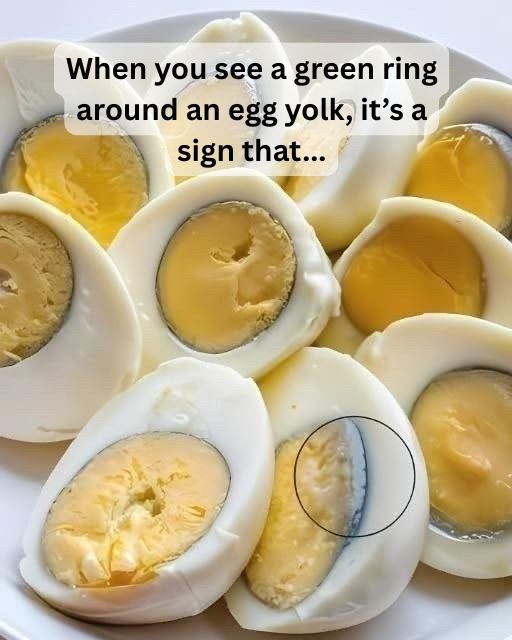
You prepare a batch of hard-boiled eggs for breakfast, a sandwich, or a fresh salad—only to crack one open and discover an unexpected green or gray ring surrounding the yolk. For many people, this moment sparks disappointment and even concern. The eggs were cooked carefully, the timing seemed right, and yet the strange discoloration still appeared.
The good news is simple: this common kitchen surprise is completely harmless.
Although the green ring may not look particularly appetizing, it does not mean the eggs are spoiled or unsafe to eat. In fact, it is the result of a perfectly natural chemical reaction that occurs during cooking—one that countless home cooks encounter without fully understanding why.
Hard-boiled eggs appear simple to make, but achieving the ideal texture and appearance often depends on small details that are easy to overlook.
The greenish ring forms when eggs are exposed to excessive heat or cooked for too long. During the cooking process, sulfur naturally present in the egg white reacts with iron contained in the yolk. When this reaction occurs under high temperatures or prolonged cooking times, it creates a thin layer of iron sulfide around the yolk.
This is what produces the green or gray discoloration.
The reaction affects appearance far more than flavor or safety. The egg remains edible and nutritious, but the texture may become slightly drier and the presentation less appealing—especially if the eggs are being served to guests or used in recipes where appearance matters.
The encouraging part is that preventing this ring is usually straightforward.
The secret lies not in advanced culinary skills or expensive equipment, but in careful temperature control and proper cooling.
Many people assume hard-boiled eggs should be aggressively boiled from beginning to end. In reality, constant high heat is often the reason overcooking occurs. A gentler approach delivers better results.
For consistently smooth yolks and tender egg whites, begin by placing eggs in a pot and covering them with water. Bring the water to a boil, but avoid prolonged rapid boiling. Once boiling begins, reduce the heat and allow the eggs to simmer gently rather than cook under intense rolling heat.
Cooking time matters.
Depending on the size of the eggs and personal preference, a simmering period of approximately 9 to 12 minutes is generally sufficient. Smaller eggs may require slightly less time, while larger eggs may need closer to the upper end of that range. Extending the cooking process unnecessarily increases the likelihood of the iron-sulfur reaction becoming visible.
Equally important is what happens immediately after cooking.
Many people leave eggs sitting in hot water after removing the pot from heat, unknowingly allowing the cooking process to continue. Residual heat trapped inside the shell keeps raising the internal temperature, which can contribute directly to the green ring.
This is why rapid cooling makes such a difference.
Transferring cooked eggs immediately into an ice bath or bowl of cold water stops cooking almost instantly. This simple step helps preserve color, improves texture, and dramatically reduces the chance of discoloration forming around the yolk.
Cooling offers another advantage as well.
Anyone who has struggled with stubborn shells knows how frustrating peeling hard-boiled eggs can become. Rapid cooling causes the egg contents to contract slightly away from the shell, often making peeling easier and cleaner. Fewer broken whites and smoother surfaces mean better presentation and less wasted food.
Another useful kitchen tip involves the age of the eggs themselves.
Surprisingly, very fresh eggs are often harder to peel than older ones. Eggs that have spent several days in the refrigerator typically peel more easily because subtle internal changes reduce the bond between the shell membrane and the egg white. For recipes requiring neatly peeled eggs—such as deviled eggs or salads—slightly older eggs are often the better choice.
Storage also deserves attention.
If hard-boiled eggs are not eaten immediately, refrigeration remains essential. Properly stored eggs maintain quality and freshness longer while reducing the risk of spoilage. Keeping them chilled and protected ensures they remain ready for quick meals or snacks throughout the week.
In the end, perfect hard-boiled eggs are less about luck and more about understanding a few simple principles.
A little attention to heat, timing, and cooling can transform an ordinary kitchen task into consistently reliable results. With these small adjustments, there is no need to settle for rubbery whites or green-ringed yolks.
Instead, you can enjoy hard-boiled eggs the way they were meant to be—smooth, tender, flavorful, and visually appealing every time they reach the plate.