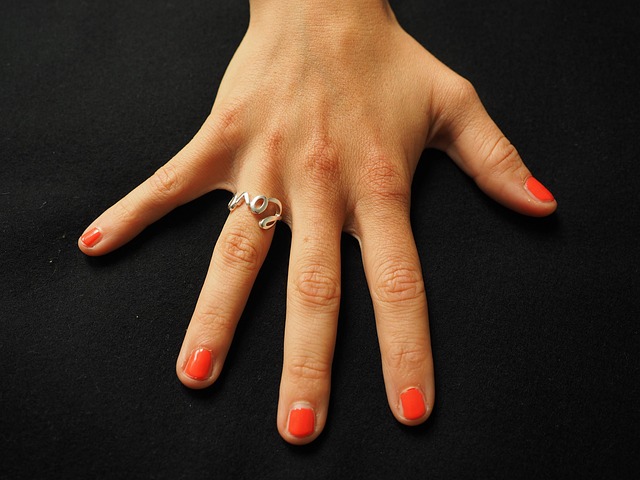
According to Dr. David Sinclair, fingernails may offer more insight into overall health than most people realize. He suggests that subtle changes in nail growth and condition can reflect deeper biological processes happening within the body, including cellular regeneration and the rate of aging itself. While this idea is not part of routine medical diagnostics, it has gained attention because it connects an everyday physical feature to broader discussions about health and longevity.
At first glance, fingernails are rarely associated with serious health indicators. Most people tend to focus on more familiar markers of well-being such as diet, cardiovascular health, lung function, or energy levels. Nails are often treated as cosmetic or secondary features rather than meaningful biological signals. However, Sinclair’s perspective highlights a different way of observing the body—one that looks at small, consistent changes over time as potential indicators of internal processes.
The central idea behind this view is that fingernail growth is linked to cellular activity in the body. Nails grow as a result of new cells being produced at the nail matrix. This process is influenced by overall metabolic activity, circulation, and general physiological function. In theory, when the body maintains efficient cellular regeneration, nail growth remains steady. When biological processes slow, changes may also be reflected in reduced growth rates.
From this perspective, fingernails become a visible, slowly changing record of internal biological rhythm.
Dr. Sinclair has stated that he occasionally observes his own fingernails as part of a broader interest in tracking signs of aging. Rather than relying solely on external appearance or isolated health metrics, this approach considers long-term biological trends that manifest in small, measurable ways over time.
Biological age, as distinct from chronological age, is central to this discussion.
Chronological age simply reflects the number of years a person has lived. Biological age, however, refers to how efficiently the body’s cells and tissues are functioning relative to time. Two individuals of the same chronological age may have very different biological ages depending on genetics, lifestyle, environment, and overall health.
In this context, fingernail growth is presented as one of many potential indicators of biological aging.
Research cited in discussions on this topic includes a study from 1979 that observed fingernail growth rates in a large group of individuals over time. The findings suggested that nail growth gradually slows with age, with an approximate decline beginning around the age of 30. One reported estimate indicated a reduction of about 0.5% per year in nail growth rate as people age beyond this point.
From this observation, the idea emerges that deviations from expected nail growth patterns might reflect differences in biological aging speed. Faster-than-average growth, in theory, could indicate more efficient cellular regeneration, while slower growth might suggest the opposite.
However, it is important to understand this concept in proper context.
Fingernail growth is influenced by many factors beyond aging alone. Nutrition, hydration, circulation, hormonal balance, medication use, and even seasonal changes can all affect nail appearance and growth rate. Because of this complexity, fingernails cannot be used as a definitive measure of health or life expectancy.
Instead, they may be considered one small piece of a much larger biological picture.
The broader takeaway from Sinclair’s perspective is not that fingernails determine lifespan, but rather that the body often contains subtle signals that reflect internal processes more quietly than we typically notice. These signals are not meant to create alarm, but to encourage awareness of how interconnected bodily systems truly are.
Ultimately, fingernails should not be interpreted as a predictive tool for life expectancy. Instead, they serve as a reminder that the body is constantly changing, regenerating, and responding to internal and external conditions in ways that are sometimes visible, even in something as simple as nail growth.
Understanding these connections adds perspective to how health is viewed—not through a single sign, but through a combination of many ongoing biological processes working together over time.