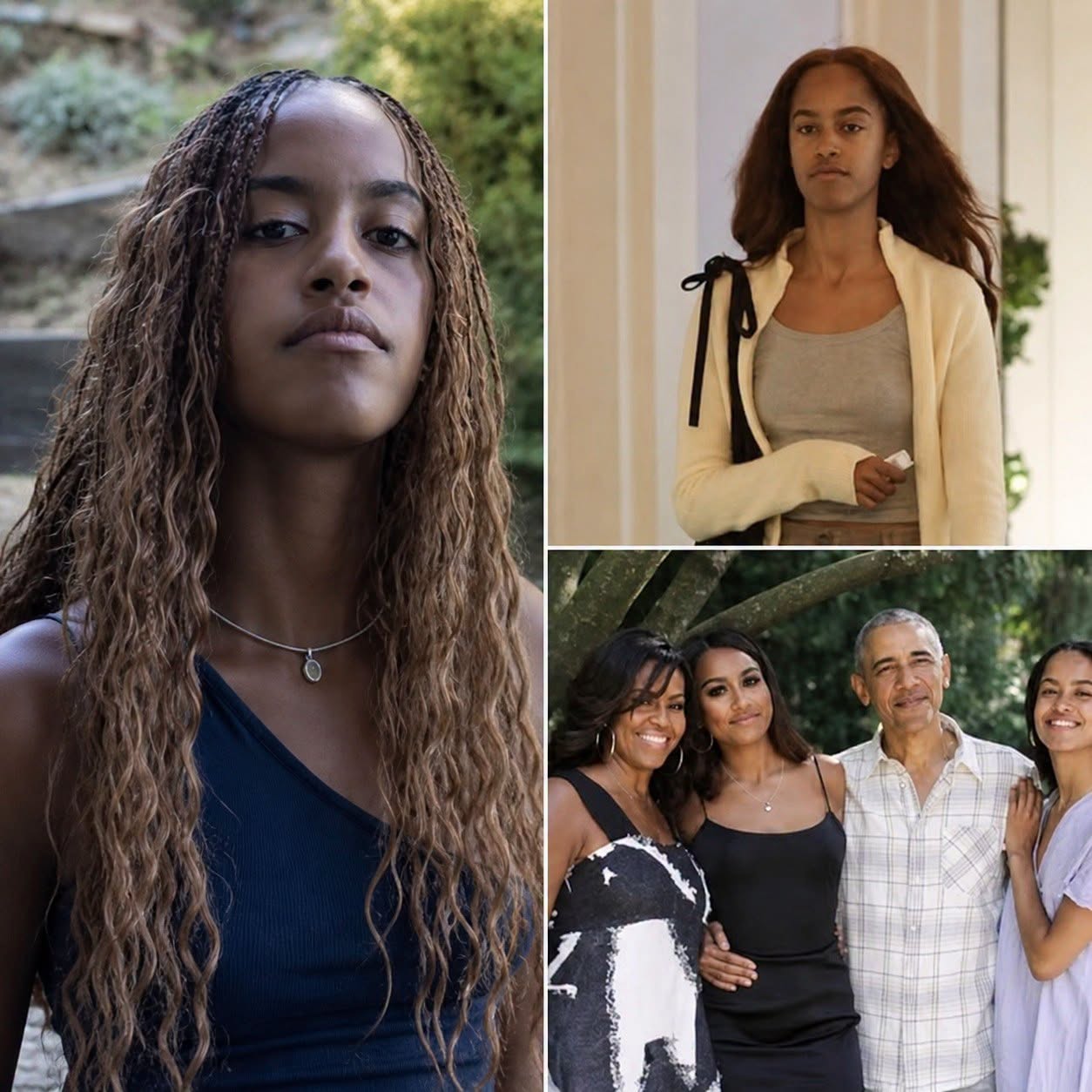
Malia Obama, the eldest daughter of former U.S. President Barack Obama and former First Lady Michelle Obama, is steadily building a creative career in film and television—this time under a new professional identity. Choosing to work as “Malia Ann,” using her middle name rather than her widely recognized surname, she has taken a deliberate step as she develops her place within the entertainment industry.
The decision has attracted considerable public attention, not because it signals separation from her family history, but because it reflects a thoughtful effort to establish her own professional path.
For many observers, the name choice represents something larger than branding. In industries shaped by reputation and public perception, a well-known family name can create immediate assumptions—sometimes opening doors, but also carrying expectations that may overshadow personal work and artistic identity. By choosing “Malia Ann,” she appears to be creating space for her projects and creative contributions to be evaluated on their own merit rather than through the lens of political legacy alone.
Importantly, the move is not widely viewed as an attempt to reject or erase her background.
Malia has spoken positively about her upbringing and the values instilled by her family, and those close to her have emphasized that the name adjustment reflects professional intention rather than personal distance. In many creative fields, artists, performers, and writers adopt alternative professional names to define a specific identity connected to their craft. For Malia, the choice appears to align with that tradition while allowing her work to develop independently.
Her transition into entertainment has been gradual but increasingly visible.
Rather than stepping immediately into high-profile public roles, she has focused on gaining behind-the-scenes experience and learning the collaborative processes that shape film and television production. This approach reflects a commitment to craft development rather than relying solely on public recognition.
Among her most notable professional experiences is her work as a writer on Swarm, a television series co-created by Donald Glover. The project, known for its psychological themes and unconventional storytelling, provided Malia with the opportunity to work within a professional writers’ room and contribute to narrative development in a demanding creative environment.
Experiences like these are significant because writing and production often require skills that remain invisible to audiences but are essential to storytelling—collaboration, revision, character development, pacing, and the ability to shape ideas into emotionally engaging narratives.
By participating in these environments, Malia has been building not just credits, but practical industry knowledge.
Those familiar with entertainment careers note that creative credibility is rarely established overnight. Success typically depends on sustained work, mentorship, experimentation, and the willingness to learn through experience. Malia’s path so far suggests a focus on long-term growth rather than immediate celebrity visibility.
Her decision to adopt a professional identity also reflects a broader reality faced by individuals connected to prominent families.
Famous surnames can create opportunities, but they can also invite scrutiny, assumptions, and pressure to meet expectations unrelated to personal ability. For some, establishing an independent identity becomes part of the process of proving competence and building confidence within their chosen field.
In Malia Ann’s case, the emphasis appears to be clear: allowing audiences, collaborators, and critics to engage first with the work itself.
As she continues developing projects and refining her artistic voice, attention is increasingly shifting from who she is related to toward what she is creating. That transition—from public identity to creative authorship—often marks an important stage in any artistic career.
While her family name remains globally recognizable, her growing presence in film and television suggests a different narrative taking shape—one centered not on politics or legacy alone, but on storytelling, creative discipline, and the pursuit of a professional identity earned through work and experience.