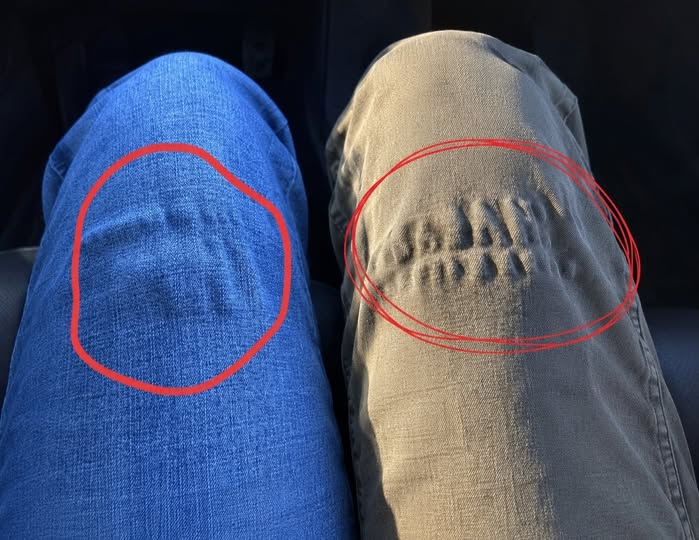
Those strange ripples, twisted seams, and wavy patches that suddenly appear on your jeans after laundry day are not random. They’re the visible signs of stress inside the fabric itself — a quiet breakdown happening between the materials that make modern denim comfortable in the first place.
Most people still think of jeans as heavy, rugged cotton that can survive anything. Decades ago, that was mostly true. But modern denim is rarely pure cotton anymore. Many jeans now contain elastane, spandex, or other stretch fibers woven into the fabric to create that flexible, body-hugging fit people expect. The result feels softer, moves better, and keeps its shape during wear — but it also makes denim far more sensitive to heat, friction, and aggressive washing.
Inside the fabric, cotton and stretch fibers behave very differently under stress. Cotton can shrink, swell, and tighten when exposed to water and heat. Elastane, meanwhile, is elastic by design, but it weakens quickly when repeatedly overheated or overworked. Every hot wash, every high-speed spin cycle, and every scorching dryer session slowly damages those stretchy fibers. At first the damage is invisible. Then, gradually, the balance between the materials begins to fail.
Once the elastic fibers weaken, the cotton starts acting independently. Parts of the fabric tighten unevenly, seams begin pulling in different directions, and areas under tension — especially around the thighs, knees, pockets, and hems — start forming permanent waves or ripples. The distortion becomes “set” into the jeans, almost like wrinkles baked into plastic. That’s why the ripples often remain even after ironing or rewashing.
Dryers are usually the biggest culprit. High heat causes elastane to lose resilience while shrinking the surrounding cotton. As the fabric tumbles, twists, and contracts, the jeans dry into warped shapes instead of relaxing naturally. Tight-fitting jeans are especially vulnerable because the fabric is already under constant strain from stretching during wear. Skinny jeans and slim cuts often show rippling faster than relaxed fits because the elastic fibers are working harder every time you move.
Overloading the washing machine can make things even worse. When jeans are packed tightly with towels, hoodies, or heavy garments, the denim gets pulled and compressed from multiple angles during the spin cycle. That mechanical stress can distort seams and overstretch certain sections of the fabric long before the wash is even finished.
Even detergent plays a role. Harsh detergents and excessive washing strip away oils and weaken fibers over time, leaving denim stiffer and more prone to uneven shrinking. Frequent washing also accelerates color fading, which is why heavily washed jeans often look both more wrinkled and more worn out.
The good news is that the damage is usually preventable. Jeans last far longer when treated less like gym clothes and more like structured garments. Washing them in cold water helps keep both cotton and stretch fibers stable. Turning jeans inside out protects the outer surface from friction and reduces visible wear lines. Using a gentle cycle minimizes twisting and torque during washing, especially around seams.
Giving jeans enough room in the machine matters too. Denim needs space to move without being knotted around other clothing. Smaller loads create less pulling and reduce stress on the fabric structure. If your jeans are particularly expensive or contain a high percentage of stretch material, mesh laundry bags can add another layer of protection.
Drying habits matter most of all. Air drying is the safest option because it allows the fibers to relax naturally without sudden heat shock. If you use a dryer, low heat is essential. Pulling jeans out while they’re still slightly damp and smoothing them by hand can help prevent wrinkles and waves from setting permanently into the fabric. Hanging them straight instead of draping them awkwardly also helps the seams settle correctly as they dry.
Some denim enthusiasts even wash their jeans as little as possible, spot-cleaning small stains and airing them out between wears to preserve both color and structure. While you don’t need to go to extremes, reducing unnecessary washes can dramatically extend the life and appearance of your denim.
In the end, those weird ripples are really a warning sign: modern jeans may look tough, but the materials inside them are surprisingly delicate. A little less heat, a little less force, and a little more patience in the laundry process can keep denim looking smoother, fitting better, and lasting years longer than it otherwise would.