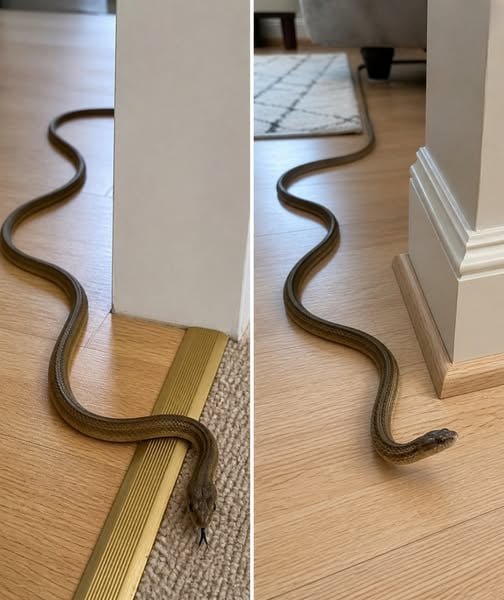
A snake inside the home is often perceived as something out of a nightmare scenario, triggering immediate panic and alarm. The instinctive reaction is fear, and understandably so—unexpected encounters with wildlife in indoor spaces can feel threatening and disorienting.
However, in most cases, the presence of a snake indoors is not the result of aggression or intent, but rather circumstance. Snakes typically enter human environments in search of food, shelter, or environmental stability. Their movement is often driven by basic survival needs rather than interaction with people.
More specifically, they tend to follow the same ecological pathways as their prey. Rodents, insects, and small animals frequently attract snakes, and when those food sources move closer to human structures, the predators may follow. In doing so, they can enter homes through surprisingly small access points—cracks in foundations, gaps under doors, unsealed vents, utility openings, or poorly screened windows.
When an encounter does occur indoors, the situation can escalate quickly due to panic and confusion. Sudden movement, noise, or attempts to approach the animal can heighten stress for both humans and the snake. This increases the likelihood of defensive behavior, including biting, even from non-venomous species.
For this reason, the immediate priority is not confrontation, but containment and safety.
Creating distance between people, especially children and pets, and the animal is essential. Closing interior doors where possible can help limit movement within the home and reduce the chance of escalation. The goal is not to engage with the snake, but to reduce variables until the situation is safely resolved.
It is also important to avoid attempting to handle or identify the snake without proper training. Species misidentification is common, and in some regions, venomous and non-venomous snakes can appear very similar. Even non-venomous snakes can bite when threatened, causing injury or infection.
The safest and most effective response is to contact trained professionals. Animal control services, wildlife removal specialists, or licensed pest management experts are equipped to handle relocation safely and humanely, minimizing risk to both residents and the animal itself.
Once the immediate situation has been resolved, attention should shift toward prevention.
Homes can be made less accessible by sealing structural gaps, installing door sweeps, reinforcing window screens, and securing vents or utility entry points. Reducing clutter around the home can also limit hiding spaces for rodents and insects, which indirectly reduces the likelihood of attracting snakes in the first place.
In ecological terms, snakes play an important and beneficial role as natural pest controllers. Outdoors, they contribute to balancing populations of rodents and insects, helping maintain environmental stability. The issue arises not from their existence, but from proximity to human living spaces.
Ultimately, a snake inside the home is best understood not as an act of aggression, but as a misdirected encounter between two overlapping environments. With calm response, proper precautions, and professional support, what initially feels like a crisis can usually be resolved safely and without harm—turning fear into a controlled, one-time event rather than a lasting problem.