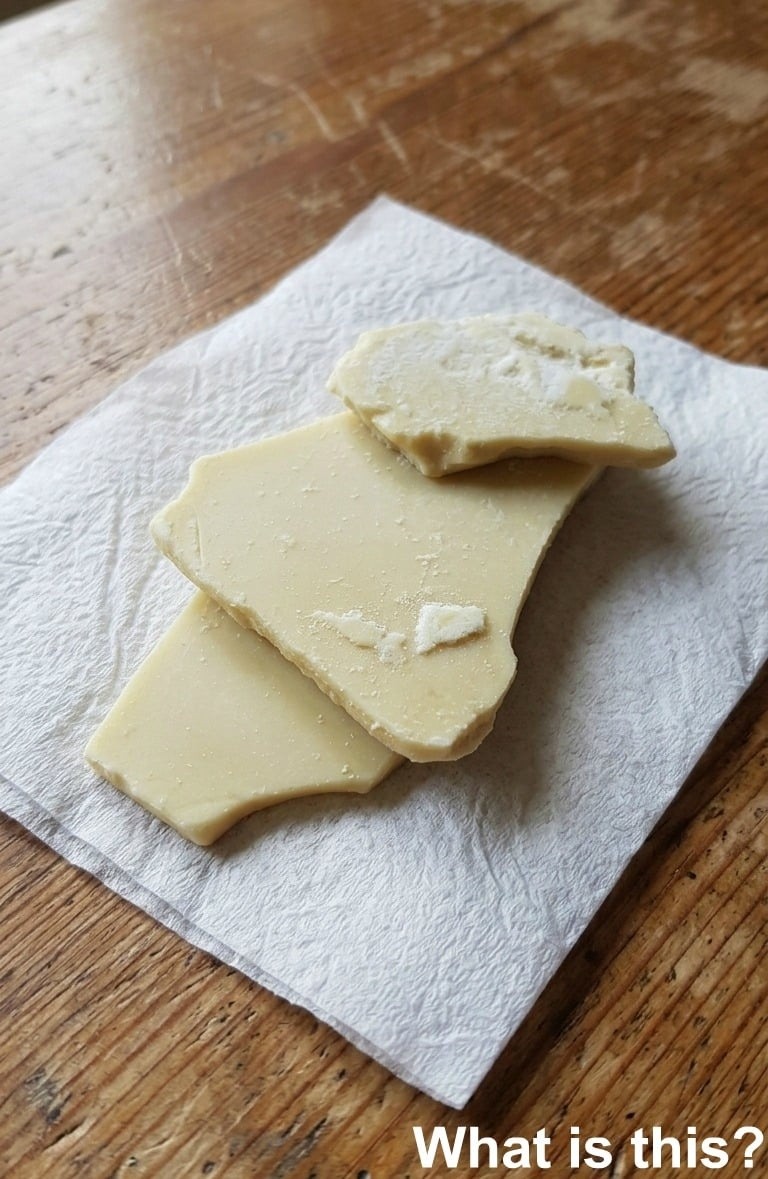
At first glance, it looked like something deeply unsettling.
My heart raced as I stared at the pale, broken fragments scattered across the floor, lying in the dust like pieces of evidence from a story I never expected to enter. The sight immediately triggered unease. Their unusual appearance—the faded color, rough edges, and powdery coating—made them seem strangely out of place, almost suspicious.
In moments like these, the mind rarely waits for facts.
Instead, it fills the silence with possibilities.
Kneeling down to inspect the fragments more closely, I turned them over carefully in my hand while my thoughts raced far ahead of reality. The texture felt odd. The pale surface looked unnatural. Nothing about them appeared familiar at first glance, and that uncertainty allowed imagination to take control.
A series of worst-case scenarios surfaced almost instantly.
I wondered whether the pieces belonged to something harmful—hidden substances, discarded materials, or something dangerous that had somehow found its way into the house unnoticed. As a parent, the fear came quickly and instinctively. Thoughts shifted toward risks children may encounter without understanding, and for a brief moment, concern outweighed reason.
The room suddenly felt different.
What had moments earlier been an ordinary corner of the home now carried an atmosphere of suspicion. The fragments seemed to demand an explanation, and until one appeared, anxiety filled the gap.
Then something changed.
As I held one of the pieces closer, a faint scent reached me—soft, sweet, and unexpectedly familiar. The smell cut through the tension almost immediately. I paused, inhaled again, and recognition arrived in an instant.
It was not chemicals.
Not medicine.
Not anything dangerous at all.
The mystery was far more ordinary than the imagination had allowed.
The fragments were simply pieces of forgotten white chocolate.
Over time, the chocolate had dried and developed what is commonly known as “bloom,” a harmless white coating that forms when fat or sugar crystals rise to the surface. Broken, dusty, and altered by age, it had transformed into something visually misleading—strange enough to spark concern, but completely harmless in reality.
The relief was immediate and almost disorienting.
The tension that had built so quickly dissolved into laughter and mild embarrassment. What had felt moments earlier like the discovery of something alarming became a reminder of how powerfully fear can shape perception before evidence has a chance to speak.
Of course, that relief was followed by a familiar parental response—a gentle scolding directed toward my son for leaving snacks behind in his room.
But the moment lingered longer than expected.
It reminded me how quickly care and responsibility can turn ordinary messes into imagined disasters. Love sharpens awareness, especially inside the home, where the instinct to protect often arrives faster than logic.
And sometimes, what looks like a mystery—or even a threat—is nothing more than forgotten chocolate waiting to be recognized for what it truly is.