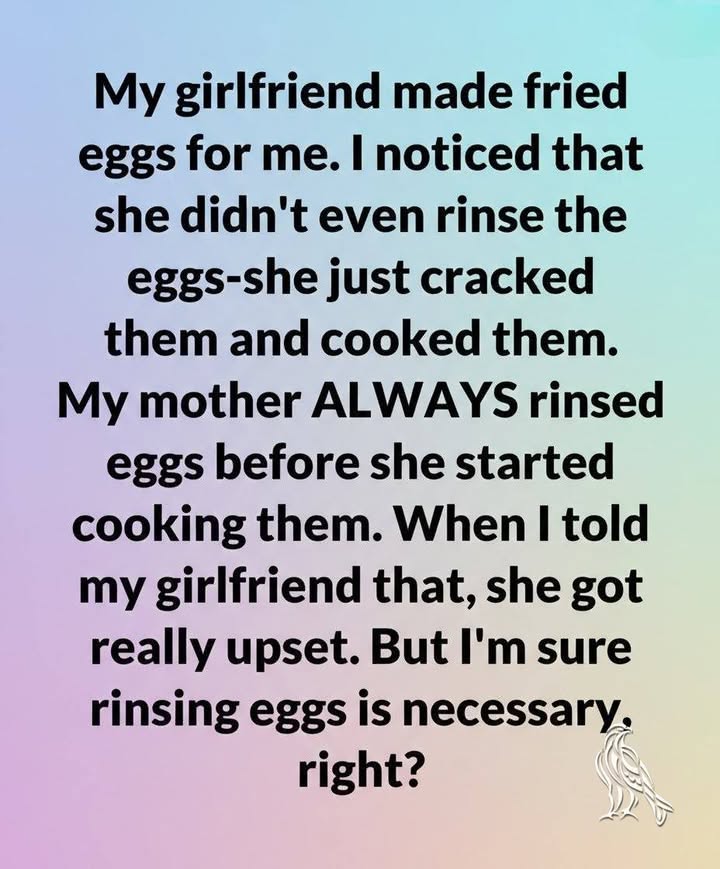
Childhood never truly stays behind. Long after we leave our family homes, the lessons, traditions, and routines that shaped us continue to influence the way we live. They appear in quiet moments—in the kitchen at sunrise, during a quick trip to the grocery store, or around the dinner table at the end of a busy day. These familiar rituals often become so deeply rooted in us that we rarely question them. They feel comforting, familiar, and safe. More importantly, they feel like the “right way” to do things.
As adults, we carry these invisible expectations into our relationships without even realizing it. The customs we grew up with become the standard by which we unconsciously measure daily life. But every person enters a relationship with their own history, their own traditions, and their own understanding of what home should feel like. What seems completely normal to one partner may feel unusual or even uncomfortable to the other.
This is where many misunderstandings begin—not with major disagreements, but with small, everyday moments. A casual comparison to how a parent used to do something. A well-intentioned correction. A passing comment about family traditions. These remarks are often meant as reflections of the past, but they can be received as criticism in the present.
When that happens, the issue is rarely about the task itself. It is not really about breakfast, laundry, holiday traditions, or how the house is organized. Instead, it becomes about something much deeper: the desire to feel appreciated, respected, and valued by the person we love. What was intended as a memory can sound like disapproval. What was meant as a suggestion can feel like rejection. And suddenly, an ordinary morning can leave behind an unexpected emotional wound.
Over time, these small moments can create distance if they are not acknowledged. Hurt feelings may go unspoken. Resentment can quietly build beneath the surface. Yet most relationship conflicts are not born from bad intentions—they arise from misunderstandings, assumptions, and the collision of two different life experiences.
The path toward healing is not found in proving whose way is correct. Healthy relationships are not built on winning arguments or defending traditions. They are built on understanding. Healing begins when partners choose to look beyond the action and see the intention behind it. A sincere thank-you instead of a correction. A thoughtful question instead of a comparison. A willingness to listen rather than assume.
The strongest couples learn to communicate the emotions beneath their reactions. Statements such as, “I wanted to feel appreciated,” or “I didn’t realize that sounded critical,” create opportunities for connection rather than conflict. These conversations help transform misunderstandings into moments of growth, allowing both people to feel heard and understood.
As relationships mature, something remarkable begins to happen. Couples stop trying to recreate the families they came from and start creating something entirely new. New traditions emerge through shared experiences, compromises, and mutual respect. These rituals are not hers, not his, and not their parents’. They belong to the relationship itself.
This process is one of the most beautiful parts of building a life together. It is not about abandoning the past or choosing one person’s traditions over another’s. It is about intentionally creating a future that reflects both partners equally. Through countless small decisions and everyday acts of love, a unique family culture takes shape.
In the end, the strongest relationships are not defined by the traditions people inherit, but by the traditions they create together. And within those simple, shared choices—a kind word, a gesture of appreciation, a willingness to understand—a different kind of family is born, one built not on habit, but on connection, respect, and love.